

CTCIEF
中鼎教育基金會
Youth Innovation Ignites a Sustainable Future: 6th Living Lab Project Awards Come to a Successful Close

The 6th Living Lab Project Awards (2026), jointly organized by the CTCI Education Foundation (CTCI EF) and the Taiwan Institute for Sustainable Energy (TAISE), with guidance from the Ministry of Education, culminated in a project showcase and awards ceremony on June 13 at CTCI Group’s Second Headquarters. Centered on the spirit of the Living Lab, this year’s event encouraged young people to start with real-world societal needs and develop sustainable solutions through research, design, and hands-on implementation. The event attracted 528 young participants from 132 teams representing 61 colleges and universities across 12 countries, with 124 completed project submissions received. All participation indicators reached record highs, demonstrating the younger generation’s enthusiasm and determination to address sustainability challenges through innovation.

Following the written review and final-round evaluation, 20 teams advanced to the project showcase stage, bringing together 80 young participants from 23 colleges and universities across five countries to exchange ideas and experiences. The teams addressed a diverse range of sustainability issues spanning the environmental, social, and economic dimensions. Through interdisciplinary collaboration and real-world testing, the teams developed innovative and practical solutions, fully demonstrating the younger generation’s ability to translate sustainability principles into concrete action.
Living Lab Spirit Takes Root on Campus, Responding to Real-World Needs through Innovation and Practice
Centered on the Living Lab concept, the Living Lab Project Awards encourage students to identify issues in their everyday surroundings and develop practical sustainability solutions by integrating professional expertise, interdisciplinary collaboration, and real-world validation, rather than stopping at the conceptual design stage. This year’s entries covered seven major themes: environmental sustainability, circular economy, renewable energy, smart technology, sustainable agriculture, green transportation, and an aging society. These projects closely aligned with the United Nations Sustainable Development Goals (SDGs) while also reflecting young people’s keen awareness of global sustainability issues and innovative thinking.

The judging panel noted that, in addition to continuing the strong focus on sustainability issues seen in previous years, this year’s projects demonstrated a marked improvement in interdisciplinary integration. Many teams brought together expertise in artificial intelligence, engineering, materials science, sustainability management, and business models to develop innovative proposals with both social impact and practical value, highlighting the growing potential for campus-based research to advance toward industrial applications.
Interdisciplinary Integration Fuels Innovation, Bringing Sustainability Solutions Closer to Real-World Application
The overall quality of this year’s competition entries reached a new high. Eugene Chien, Chairman of CTCI EF, noted that this year’s projects were more mature than those of previous years in terms of the depth of the issues addressed, innovative thinking, and implementation outcomes. Some teams have even demonstrated potential for commercialization and entrepreneurship, fully showcasing the younger generation’s ability and creativity in responding to social challenges.

Professor Wei-Chung Wang of National Tsing Hua University, who served as chair of this year’s judging panel, said that this year’s participants were indeed the most impressive to date. Not only did the final-round presentations reach a professional standard, but the students were also able to integrate interdisciplinary knowledge and apply it to real-world problems, embodying the core Living Lab spirit of “moving from research to practice.” He also encouraged young people to continue bringing campus innovations to market, enabling research outcomes to genuinely address societal needs and become an important driving force for industrial innovation and sustainable development.
Innovation Flourishes as Technology and Sustainability Converge
Following the evaluation, HW Group from National Tsing Hua University took first place with its project, “Next-Generation Sustainable Manufacturing: Cross-Material Intelligent Laser Metal Coloration Technology.” The project overcomes the high pollution and energy consumption associated with conventional metal coloration processes by integrating artificial intelligence predictive models with a dry laser process, significantly improving process efficiency. It has also received multiple honors, including the National Innovation Award and the Future Tech Award, demonstrating the strong potential of university research outcomes to advance toward industrial applications.

Second place was jointly awarded to Return+ and National Taiwan Normal University’s E-Mobility Nexus. Focusing respectively on smart healthcare and smart energy management, the two teams applied artificial intelligence, sports science, renewable energy, and energy storage technologies to develop innovative solutions that address both societal needs and the transition to net zero. The third-place entries covered a diverse range of areas, including circular agriculture, biomass resource reuse, and sustainable materials. Among them, Chicken Litter Omakase: Five-Star Chef’s Roasted Black Gold, a team jointly formed by National Ilan University and National Taiwan Normal University, was also awarded the Circular Economy Award, while 5C Carbon Walker from National Sun Yat-sen University received the Sustainable Net-Zero Award. Together, these projects showcased the tremendous creativity and energy of the younger generation in integrating innovative technologies with sustainability principles.
Building a Platform for Sustainability Talent Development and Turning Ideas into Social Impact
Beyond the competition results, this year’s project showcase also drew a number of faculty advisors from the participating teams, who joined the event in person to engage in in-depth exchanges with the young participants and judging panel, demonstrating academia’s strong commitment to cultivating sustainability talent. Through project presentations, feedback from professional judges, and exchanges among participating colleges and universities, students were able to review their research outcomes from different perspectives, further enhancing the feasibility and social impact of their solutions while fostering deeper dialogue between academia and industry.

Now in its sixth edition, the Living Lab Project Awards have gradually developed into a major platform in Taiwan for young people to put sustainability innovation into practice. The Awards not only encourage students to begin with real-world societal needs, but also help promising innovative ideas move beyond campus and into industry and society. Building on years of collaboration, CTCI EF and TAISE will continue to deepen the Living Lab spirit by bringing together resources from academia, industry, and society. Through these efforts, they aim to cultivate sustainability talent with a global perspective and strong practical capabilities, enabling more innovative ideas from young people to become an important driving force for sustainable development.
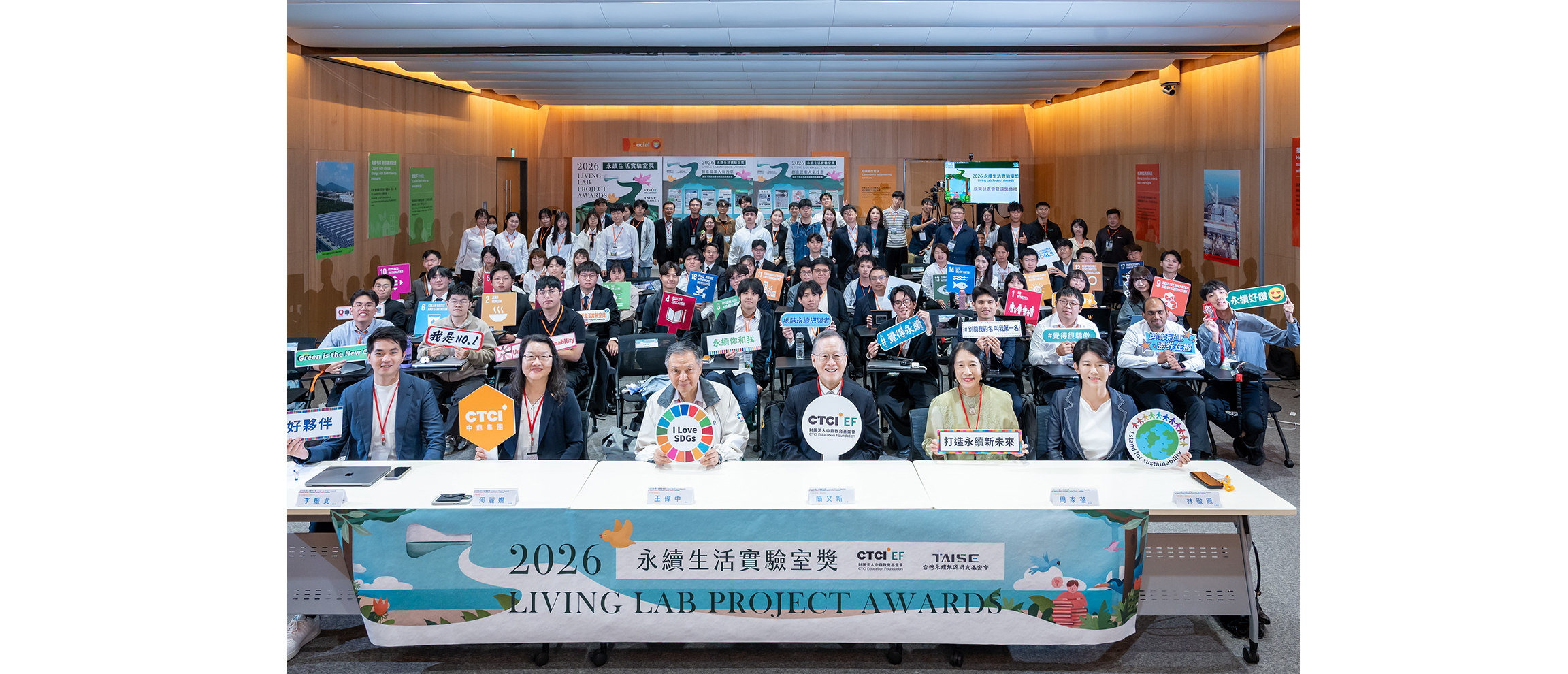
The 6th Living Lab Project Awards (2026) Conclude Successfully.
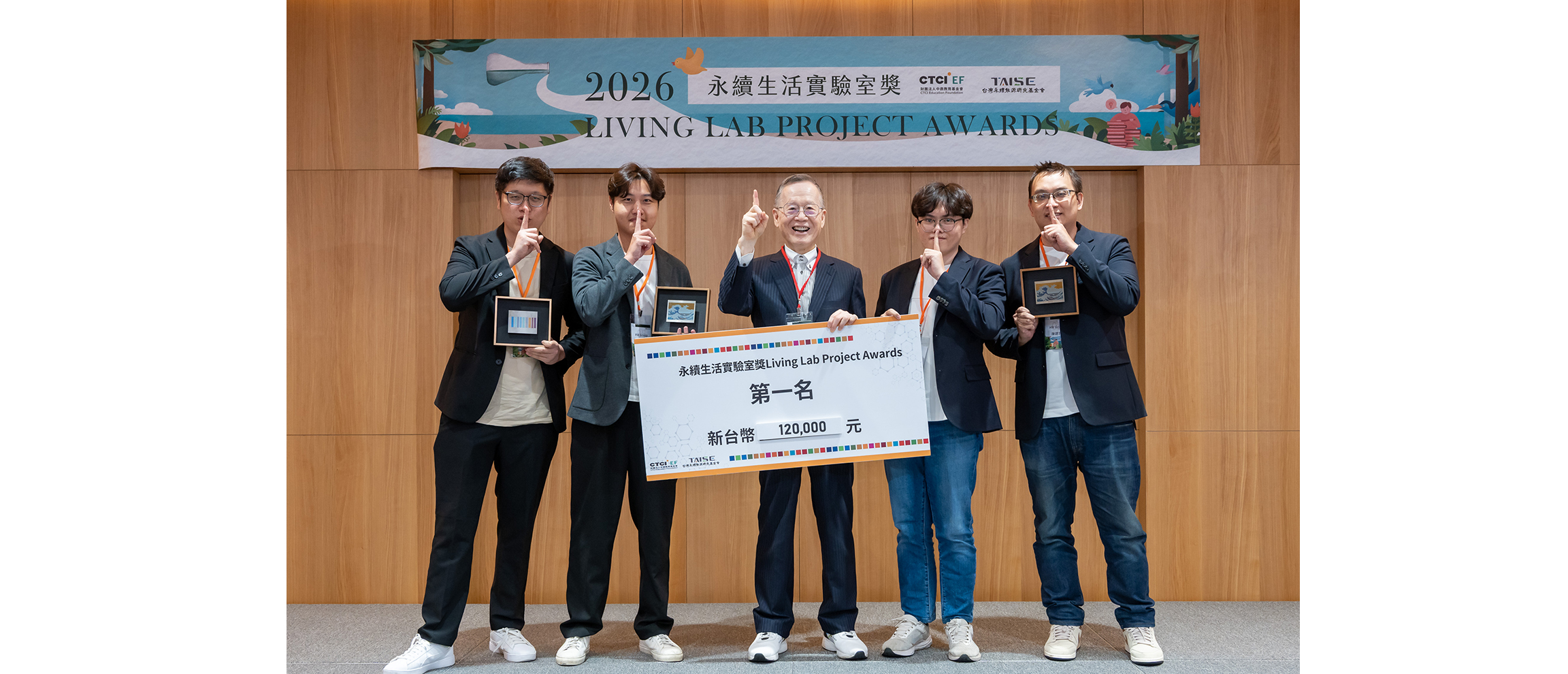
National Tsing Hua University’s HW Group Wins First Place in the 2026 Living Lab Project Awards.
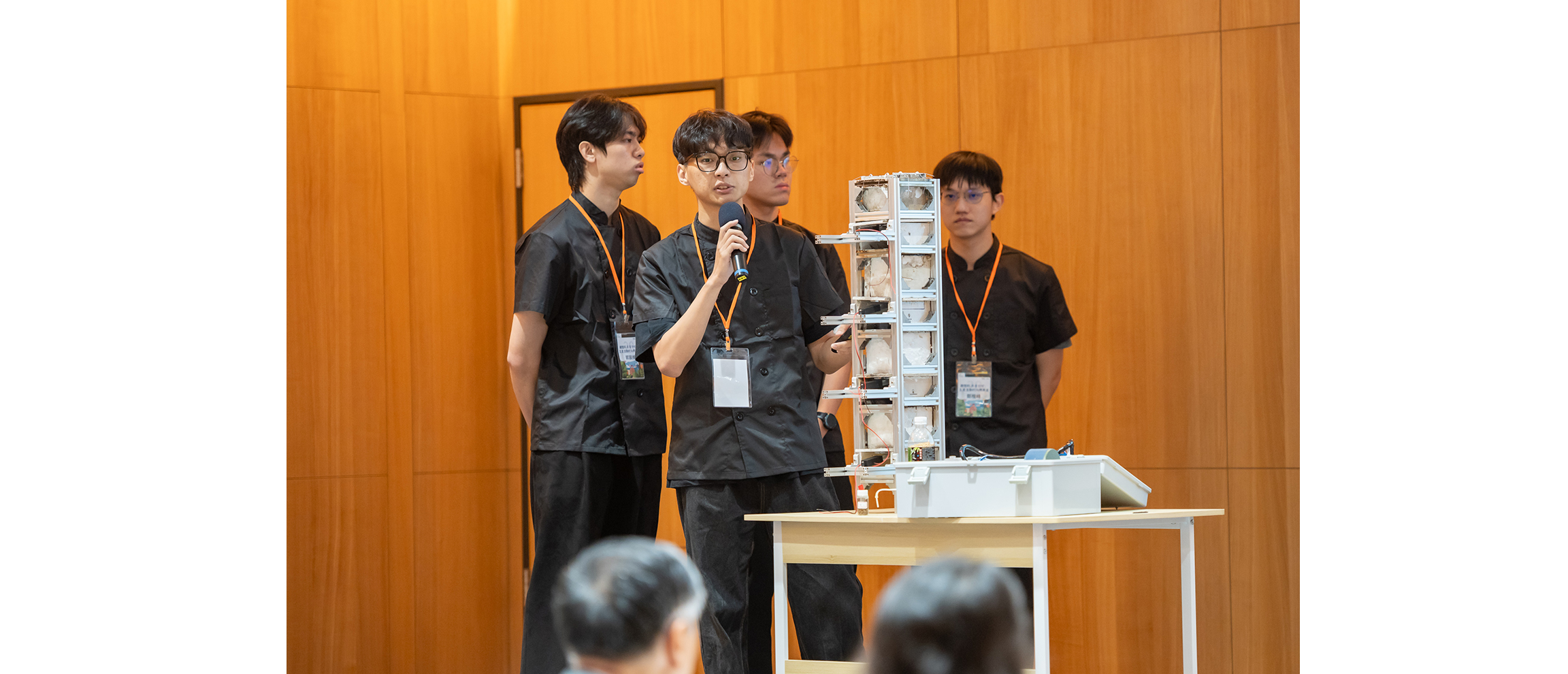
Student Projects Showcase Diverse Creativity and Innovation.


