

Sustainable Governance
永續治理
From Compliance to Co-Creation: CTCI’s Journey Toward a Net-Zero Supply Chain Transformation

Introduction
In an era where net-zero emissions have become a global priority, the supply chain is no longer merely a supporting function for project execution, but a critical extension of corporate competitiveness. At CTCI, we integrate governance, technology, and hands-on partnership to transform “compliance enforcement” into “value co-creation,” positioning suppliers not as passive entities to be managed, but as active partners in driving sustainable transformation.
Reshaping the Supply Chain: From Management to Co-Creation
In the engineering industry, supply chain performance directly affects project quality, schedule, and environmental footprint. Traditionally, supplier management has focused on quality, delivery, and cost. However, under global decarbonization trends, this approach is no longer sufficient for long-term competitiveness.

CTCI has observed that when sustainability remains merely a contractual requirement, suppliers tend to respond passively. In contrast, when companies actively invest resources and co-solve challenges, meaningful transformation occurs.

Therefore, ESG principles have been fully integrated into procurement decisions, driving three key shifts:

⦁ From “contractual requirements” to “capability building”
⦁ From “one-way audits” to “two-way dialogue”
⦁ From “risk control” to “value co-creation”

This transformation creates tangible value:

⦁ For clients: ensuring compliance with international sustainability standards
⦁ For suppliers: enhancing competitiveness and accessing green business opportunities
⦁ For the company: building a more resilient and stable supply chain system
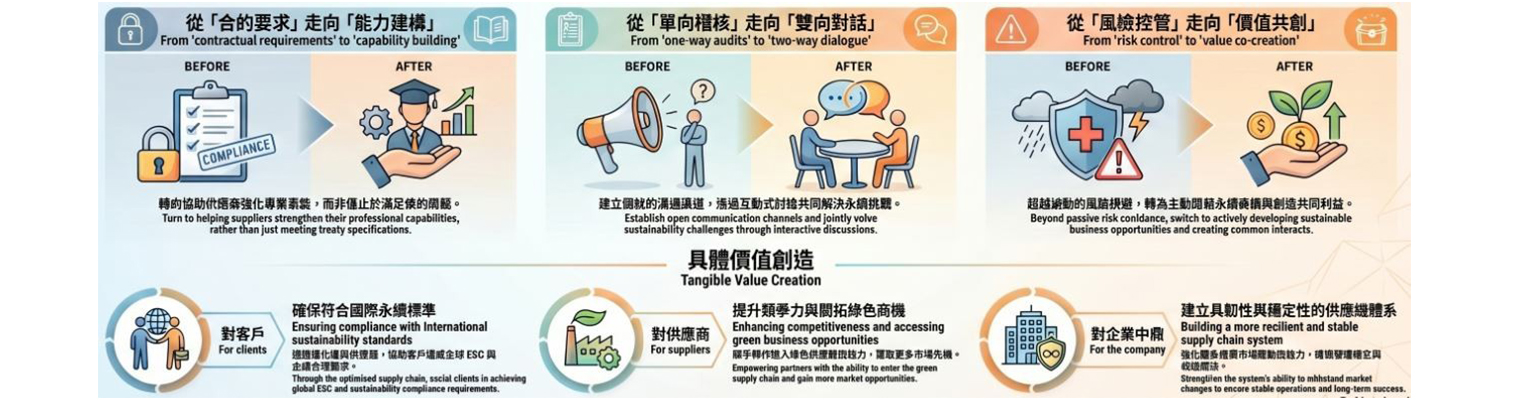
Reshaping the supply chain
Governance System: Embedding Sustainability into Execution
To manage a global supply chain network, CTCI has established a structured and tiered governance framework.

CTCI prioritize the top 95% of strategic suppliers and high-risk “first-tier concern suppliers” based on transaction value and risk exposure. Early risk identification is conducted through the Supplier Sustainability Self-Assessment Questionnaire (SAQ), followed by on-site or third-party audits for high-risk cases.

As of the end of 2025, we have achieved:
⦁ 100% supplier commitment to the Supplier Code of Conduct
⦁ Full integration of net-zero commitments for all new suppliers

In 2025, six high-risk suppliers were identified. Rather than immediate disengagement, CTCI implemented an “accompanying audit” approach—conducting on-site assessments, clarifying issues, providing improvement guidance, and continuous follow-ups.

As a result, a 100% corrective action completion rate was achieved.

This experience demonstrates that when enterprises take an additional step forward, risks can be mitigated while simultaneously transforming challenges into opportunities for supply chain upgrading.
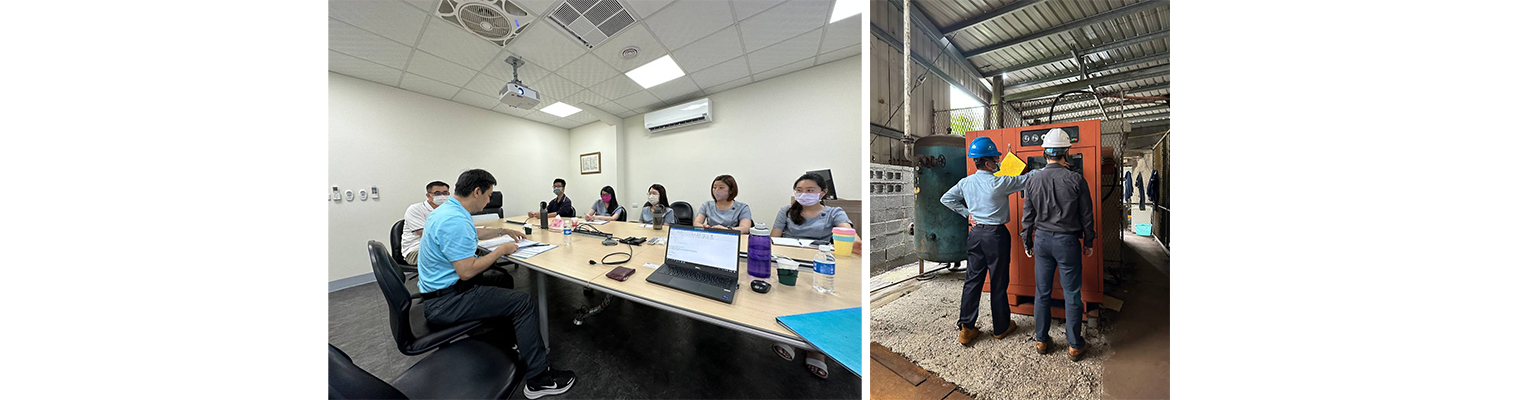
On-site assessments
Supporting Transformation: Helping Suppliers Take the First Step Toward Decarbonization
TIn advancing Scope 3 emissions reduction, CTCI found that many SMEs face similar challenges: limited resources, high technical barriers, and uncertainty in carbon management—leading to what can be described as “carbon anxiety.”

One equipment supplier once shared:

“It’s not that we don’t want to do it—we simply don’t know where to start.”
This reflects the reality of many traditional suppliers.

To address this, CTCI established the Supplier Net-Zero Alliance, shifting from “compliance enforcement” to “supportive partnership,” enabling capability development through practical, hands-on approaches:

⦁ Linking suppliers with government subsidies and external consulting resources
⦁ Training internal “carbon champions” to provide one-on-one guidance
⦁ Organizing workshops for peer learning and experience sharing

Key results in 2025 include:

⦁ 260 suppliers supported in completing GHG inventories (cumulative over three years)
⦁ 204 suppliers participated in sustainability workshops (3 sessions)
⦁ 15 editions of sustainability newsletters published for continuous knowledge sharing

The value of these initiatives lies not only in quantitative outcomes, but in enabling suppliers to move from “not understanding carbon” to “being able to manage carbon”—establishing a true starting point for transformation.
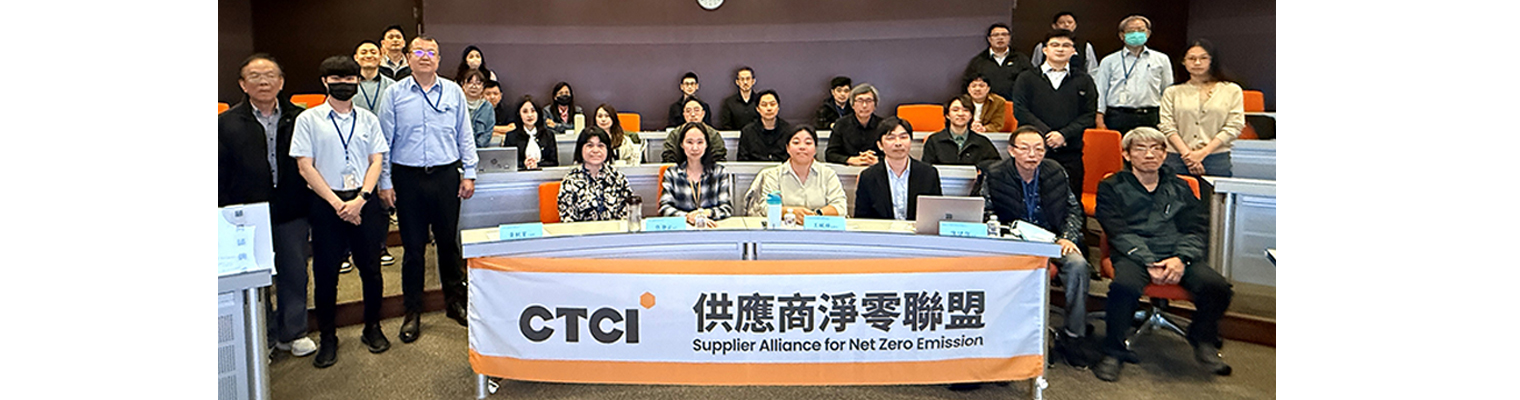
Sustainability workshops
Technology-Driven Transformation: Enhancing Management Efficiency
Managing large-scale supply chain and ESG data through manual processes alone limits efficiency and delays risk response. CTCI therefore leverages digital tools to transform sustainability management from “lack of visibility and slow response” into “real-time insight and precise decision-making.”

Through the Supply Chain Sustainability Management Platform, fragmented data is centralized and visualized, enabling rapid identification of high-risk suppliers and timely corrective actions. Robotic Process Automation (RPA) reduces manual workload and repetitive tasks, significantly improving operational efficiency. In addition, the iSteel system integrates steel structure data, ensuring consistency and accuracy across design, procurement, and construction processes.

The value of these tools goes beyond efficiency:

⦁ Reducing administrative burden for suppliers, allowing focus on core improvements
⦁ Enhancing real-time risk visibility and performance monitoring capabilities

As a result, the supply chain becomes more flexible and resilient in responding to market fluctuations and sustainability requirements.

When data becomes visible and actionable in real time, sustainability management shifts from reactive response to proactive guidance.
Talent Continuity: Building Long-Term Sustainability Capability
Sustainability transformation is a long-term journey, where talent plays a critical role alongside systems and tools.

CTCI actively collaborates with academia to cultivate interdisciplinary talent. Through internships and project-based participation, students gain hands-on experience in supply chain sustainability management, from data analysis to strategic discussions.

This engagement not only develops future talent but also introduces fresh perspectives into the organization, continuously driving innovation and ensuring the long-term progression of sustainability initiatives.
Conclusion: From Supply Chain to Value Chain
CTCI’s goal is not merely to build a compliant supply chain, but to create a sustainable value chain that grows together with its partners.

Looking ahead, we remain committed to:

⦁ Achieving 100% supplier audit coverage
⦁ Completing 100% corrective actions for high-risk findings
⦁ Supporting 500 suppliers in developing carbon management capabilities

As suppliers strengthen their capabilities, the entire industry advances in parallel. Guided by the vision of being a “Guardian of Sustainable Earth,” CTCI will continue to work hand in hand with supply chain partners to build a more resilient, competitive, and net-zero future.


