

Eco-friendly Innovation
綠色創新
Driving Key Net-Zero Projects: CTCI Implements CCUS
Beyond chimney: the underground strategy behind Taiwan’s Net-Zero transition
Achieving “Net-Zero Emissions by 2050” has become a critical national objective for Taiwan. However, achieving this goal requires more than renewable energy development; it also demands transformation across industry, transport, and society. Among various carbon reduction energy strategies, Carbon Capture, Utilization, and Storage (CCUS) is one of the key technologies, particularly for high-emission industries such as steel, cement, and petrochemicals. Overall, CCUS is not only a carbon reduction technology but also a driver of industrial competitiveness and long-term development. Unlike energy substitution, it focuses on reducing emissions at source, but still faces challenges in cost, infrastructure, and public acceptance.

This article explores the key issues surrounding CCUS development in Taiwan from technological, policy, industrial, and social perspectives, while highlighting how CTCI leverages its strong green engineering capabilities to support the nation’s net-zero transition.
1. The real challenge is trust, not technology
When discussing large-scale projects such as CCUS, external attention often focuses on technology and engineering execution. However, data and practical experience show that the most difficult challenge is often gaining public acceptance. Many people remain concerned about the safety of storing CO₂ underground, particularly whether CO₂ injection could induce seismic activity or cause large-scale leakage during earthquakes.

Taking CPC Corporation’s Tiezhenshan Carbon Storage Pilot Project in Miaoli as an example, the site uses a depleted natural gas reservoir as the storage space. It has a mudstone caprock above and a porous sandstone reservoir below, providing favorable geological conditions.Together with the Taobin and Taixi offshore areas, Tiezhenshan is considered one of Taiwan’s potential carbon storage sites and the only onshore site among them. However, after the Yongheshan project was terminated early due to local opposition, Tiezhenshan has drawn greater public scrutiny from the beginning.

This demonstrated that even with sufficient scientific data, unresolved public concerns could still affect project progress. Following project approval, CPC and CTCI carried out extensive engagement with government agencies, elected representatives, community organizations, and local residents through 11 public communication sessions. The project team also participated in local cultural activities, supported disadvantaged residents, created local job opportunities, improved community facilities, and assisted nearby residents with water and electrical repairs. Drawing on its extensive engineering experience, CTCI combined technical expertise with local communication efforts, gradually addressing community concerns and building understanding and trust through concrete CSR initiatives.
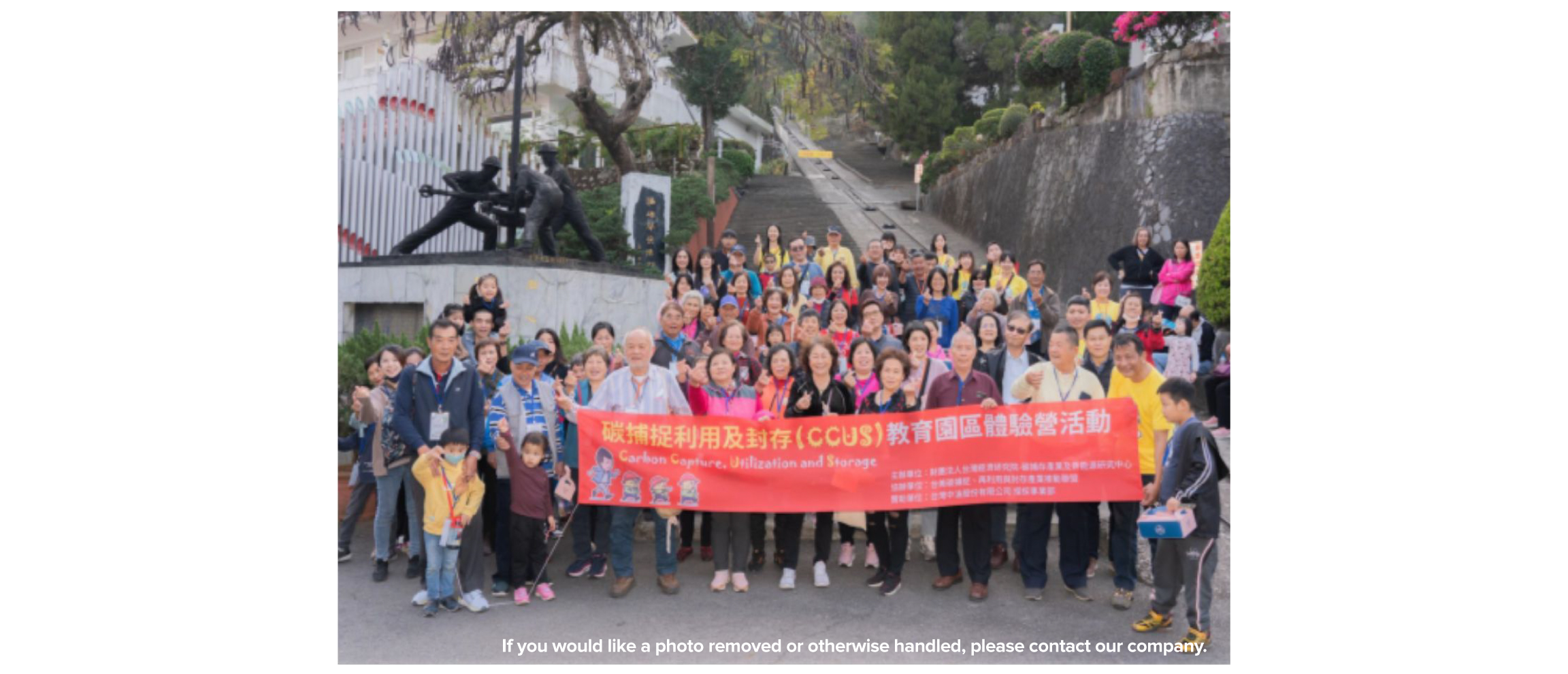
Experiential Camp at Miaoli Meinan Village Education Park
2. Depleted natural gas field transformed into Taiwan's first "underground carbon storage"
Taiwan’s first landmark carbon storage demonstration site is located at Tiezhenshan in Miaoli, where CPC is converting a depleted natural gas reservoir into an underground CO₂ storage space. The site has favorable geological storage conditions and extensive historical data. After review by the competent authorities on geological safety, injection planning, monitoring mechanisms, and public engagement, the project was approved for phased implementation in April 2026.CPC and CTCI will subsequently collaborate on commissioning and performance testing. CO₂ injection and storage operations are expected to begin in May 2026, laying the foundation for future offshore storage projects that are larger in scale and technically more challenging. In addition to serving as a validation site for carbon storage technology, this project is also an important demonstration case for liquid CO₂ storage and injection. It will provide valuable references for future commercialization and regulatory development, while helping strengthen the foundation of Taiwan’s CCUS industry.

However, the project still faces several challenges during implementation. Due to limited site space, surface facility construction and underground drilling work must be carried out simultaneously, resulting in traffic flow conflicts and limited space for equipment and machinery. To overcome these site and technical constraints, CTCI adopted off-site pre-casting and piping prefabrication methods to relieve construction pressure and shorten the schedule.
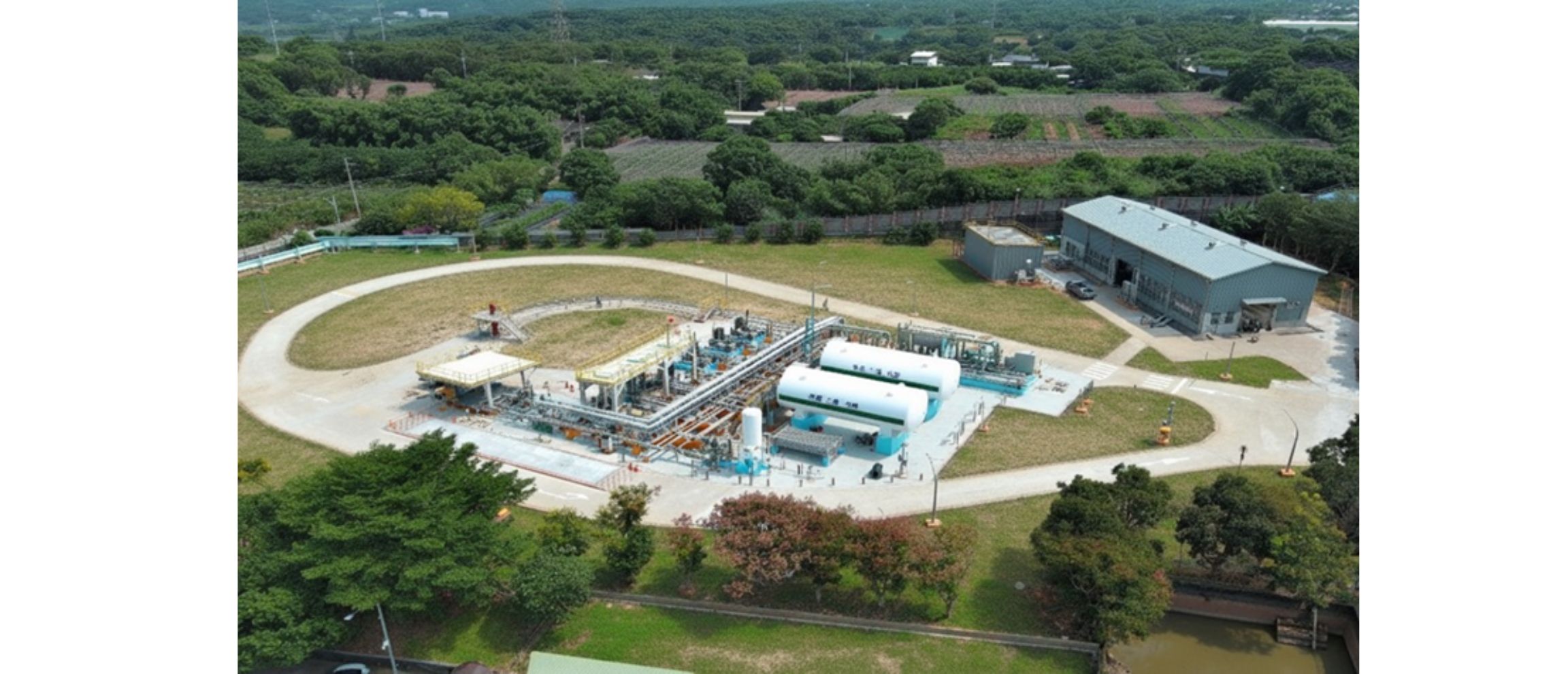
CPC Tiezhenshan Carbon Capture and Storage (CCS) Demonstration Site
3. Driving on captured carbon: a possible future
When it comes to net-zero transportation, battery electric vehicles (BEVs) usually come to mind first. However, CCUS technology also has a key role in traditional fuel vehicles and future heavy-duty transport.

The first example is synthetic fuels, or e-fuels. Under the EU’s 2035 “technology neutrality” framework, internal combustion engine vehicles may still play a role if powered by carbon-neutral fuels produced by combining hydrogen with captured CO₂ from industrial sources or the atmosphere, making CCUS a key enabling technology. Beyond fuels, CCUS also supports broader low-carbon value chains, from steel and battery materials for electric vehicles to sustainable aviation fuel (SAF) and low-carbon marine propulsion, as upstream production processes increasingly rely on carbon capture to reduce lifecycle emissions.

Another important application is blue hydrogen. Hydrogen is considered a promising energy source for buses, heavy trucks, and other large vehicles. However, the current mainstream method for hydrogen production is natural gas reforming, which generates a significant amount of CO₂. To make hydrogen a truly low-carbon energy source, CCS technology must be used to capture and store the CO₂ generated during the production process. Otherwise, emissions are merely shifted from vehicle tailpipes to hydrogen production facilities, rather than being genuinely reduced.

CPC has established a hydrogen refueling station in Kaohsiung, where the low-carbon performance of its hydrogen supply chain will depend largely on CCUS. It also plans a blue hydrogen demonstration plant at Tiezhenshan in Miaoli, aiming—through integrated hydrogen production, carbon capture, and storage sites—to develop a comprehensive demonstration park.
4. Balancing cost and regulation: a costly tug of war
For CCUS to move from demonstration to commercialization, it faces an expensive tug-of-war between cost and regulation.

The core challenge is that CCUS construction and operation costs remain extremely high. Carbon capture alone costs approximately USD 50 to 70 per ton. Without sufficient policy incentives, companies have limited motivation to invest. Low carbon fee levels and the previous lack of clear policy direction have resulted in weak incentives for corporate investment.

If the carbon fee rate set by the government remains far below the construction and operating costs of CCUS, companies will have little commercial reason to invest. In contrast, the U.S. Section 45Q tax credit program provides substantial tax credits that directly subsidize corporate decarbonization costs, highlighting the gap in policy incentives between Taiwan and other markets.

At the same time, regulatory uncertainty further discourages investment. First, all carbon storage projects must undergo a complete Environmental Impact Assessment (EIA). The entire administrative process may take five to six years, and such lengthy timelines and uncertainty significantly increase investment risk.

Second, and more importantly, legal responsibility for potential CO₂ leakage decades after storage operations cease remains unclear. High upfront costs, limited financial incentives, lengthy approval procedures, and uncertain long-term liability together create a significant barrier, making companies hesitant to commit to multi-billion-dollar investments.
Conclusion
From the utilization challenges of liquid CO₂ captured by the MTR carbon capture project at the Central Taiwan Science Park Zero-Waste Center, to public engagement efforts at Tiezhenshan in Miaoli, and the growing connection with future synthetic fuels and blue hydrogen, Taiwan’s CCUS ecosystem is gradually taking shape.

However, the fact that regulations are still under development and that cost-effectiveness remains a major challenge indicates that Taiwan is moving from the stage of “scientific validation” toward the more difficult stage of “social validation.”

As one of the founding members of the Net Zero Alliance, CTCI is committed to advancing green engineering, covering key technologies such as CCUS, green energy, and hydrogen, while also focusing on energy conservation, zero waste, renewable energy, and other sustainable EPC services.

By integrating group-wide resources, CTCI is developing comprehensive CCUS solutions covering EPC, commissioning, operation and maintenance, transportation, storage facility construction, and drilling support, gradually strengthening its industrial chain integration capabilities.

In the journey toward the 2050 net-zero target, the real challenge may no longer lie solely in technology, but in building sufficient public trust and economic incentives. Through its green engineering expertise and integrated capabilities, CTCI will continue to promote the implementation of CCUS and other key decarbonization technologies, helping Taiwan steadily advance toward net-zero transformation.


