Corporate Citizen
企業公民
Implementing the "Green Office" Through Action
As global climate action enters a critical decade, the concept of a green office has evolved from a “value-added initiative” into a “business imperative” for corporate survival. CTCI has long been committed to sustainability and actively promotes green office practices. While fulfilling its environmental responsibilities, the company also regards energy conservation and carbon reduction as core strategies essential to organizational competitiveness and long-term operational resilience.

In practice, a green office embodies three key values—environmental, operational, and brand:
.Environmental value: Through systematic management and employee engagement, the company reduces carbon emissions from air conditioning, lighting, and equipment energy consumption.
.Operational value: By adopting high-efficiency equipment and optimizing operational strategies, resource utilization efficiency is improved while costs are effectively reduced.
.Brand value: Positioning itself as a “guardian of global sustainability,” CTCI demonstrates corporate responsibility through transparent disclosure of carbon reduction achievements, strengthening its ESG competitiveness in an increasingly sustainability-driven market.

As the core of corporate operations, the CTCI headquarters building serves as a benchmark for green office transformation. The following highlights the overall energy management achievements of the headquarters in 2025, showcasing concrete actions taken to implement a green office.
Building a Strong Foundation for Sustainability
The headquarters building has utilized the Mr. Energy management system for many years, establishing a solid energy management baseline and implementing multiple equipment optimizations. Key achievements in 2025 include:
1. Establishing a Systematic Energy Management Framework
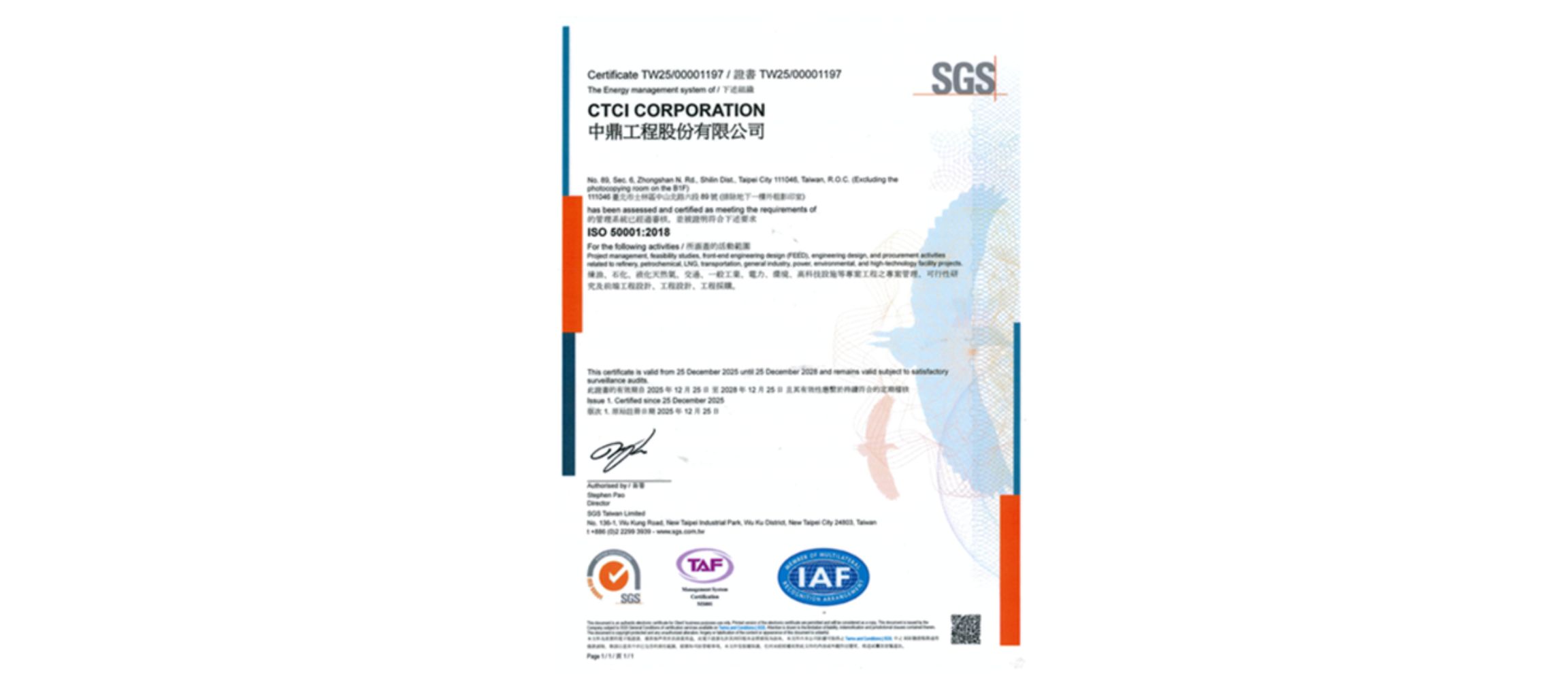
The company has introduced an intelligent energy monitoring system to build a comprehensive and sustainable management framework. In December 2025, ISO 50001 Energy Management System was officially implemented. This system enables real-time tracking of energy usage trends and identifies high-consumption areas through data analysis, continuously improving energy efficiency.
A visualized energy platform supports more precise and data-driven decision-making, laying a strong foundation for long-term energy performance improvement and future carbon reduction strategies.

• Implementation of ISO 50001 using the PDCA (Plan-Do-Check-Act) framework to systematically enhance energy efficiency.
• According to system statistics, electricity consumption per employee per working day decreased by 4.5% from 2023 to 2025.
2. Upgrading High-Energy Equipment: Data Center Optimization
The data center, a critical operational facility and major energy consumer, underwent a cooling system upgrade in 2025. By adopting high-efficiency equipment and optimizing operations, the company significantly reduced air conditioning loads while maintaining stable performance, creating a successful model for energy-saving improvements in high-consumption facilities.
3. Promoting Low-Carbon Transportation and Green Commuting
• Encouraging employees to commute by bicycle and providing free parking to increase participation, reducing carbon emissions while improving health and environmental awareness.

• Promoting the use of public transportation for commuting.

• Encouraging high-speed rail for domestic business travel instead of driving, and implementing carpooling for company vehicles to enhance safety and reduce emissions.
4. Advancing Water Resource Management and Green Procurement
• Replacing all hand soap products with environmentally certified foam soap, reducing water usage by approximately 3% while maintaining hygiene standards.

• Implementing green procurement by prioritizing ENERGY STAR-certified laptops, eco-labeled cleaning products, and FSC-certified paper products.

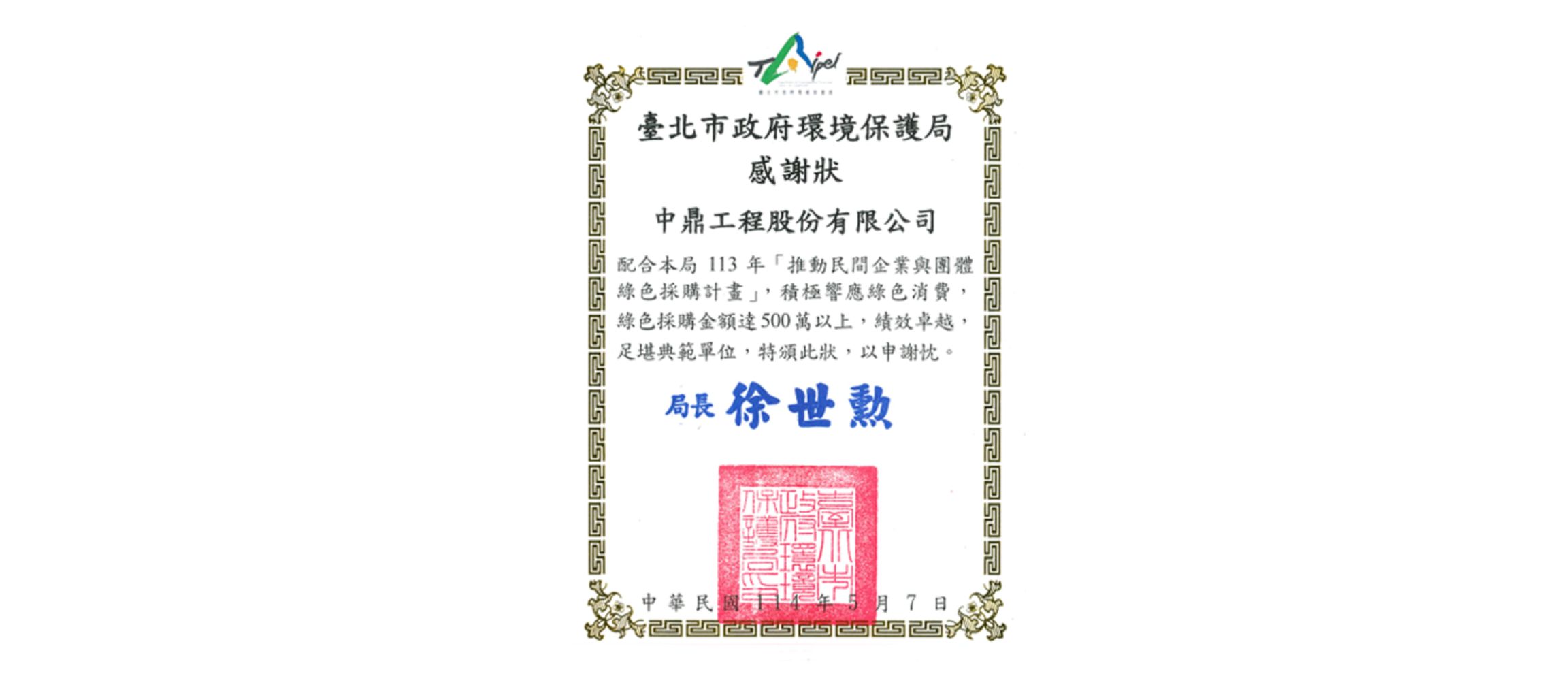
• Since 2018, the company has received multiple recognitions from the Taipei City Environmental Protection Department for excellence in green procurement.
5. Waste Reduction and Circular Economy Implementation
• Establishing a transparent waste management system by daily weighing and recording general waste, paper containers, and recyclables.

• Hosting inter-floor waste reduction competitions to encourage employee participation. Weekly and monthly reports track waste, food waste, and recycling data, resulting in a 9.6% annual reduction in total waste weight.

• Promoting 5S management and recognizing outstanding performance in regular meetings, while sharing best practices across departments.
6. Integrating Sustainability into Corporate Culture
The company incorporates energy-saving and carbon reduction concepts into both corporate activities and daily operations to build a strong green culture.

• During company sports events, reusable equipment is prioritized, and booths promoting sustainability are set up. Employees are encouraged to bring reusable tableware, and no single-use utensils are provided.
• Digital solutions are adopted for events, including electronic check-in and raffle systems, reducing paper use and avoiding unnecessary waste.
Continuous Improvement: Building Sustainable Competitiveness
Promoting a green office is an ongoing sustainability transformation. It not only aligns with the long-term vision of achieving a net-zero office by 2030, but also focuses on creating a workplace that balances employee engagement with environmental sustainability.

Through continuous optimization of daily operations and behavioral changes, the company steadily accumulates transformation results and reinforces practical implementation of green office initiatives.

Looking ahead, the CTCI headquarters will continue to:
• Optimize air conditioning systems
• Upgrade energy-efficient lighting
• Strengthen electricity management
• Promote waste reduction policies
• Establish quantitative energy management mechanisms

In response to global sustainability trends and net-zero challenges, CTCI upholds its role as the “Guardian of Sustainable Earth,” promoting ESG engagement across the organization and collaborating with partners to build a green supply chain. The company aims to lead the industry toward a low-carbon, high-efficiency, and sustainable future—creating a workplace that employees are proud of and that allows the environment to thrive.