

Eco-friendly Innovation
綠色創新
Technical Applications of Resilient Design in Solar Photovoltaic Systems to Withstand Natural Disasters

.jpg)
Global climate change has made extreme weather events increasingly frequent and intense, placing renewable energy facilities under severe stress. According to research by the National Renewable Energy Laboratory (NREL), strong winds from tropical cyclones can cause solar project asset losses of up to 60%. In 2025, Typhoon Danas unusually swept across central and southern Taiwan with maximum wind speeds reaching 144 km/hr, damaging approximately 135,000 solar modules and causing significant economic losses.

ECOVE, a subsidiary of the CTCI Group, has cultivated deep expertise in professional solar development and operations and maintenance over many years. The team understands that project resilience cannot rely on a single piece of equipment or technology; instead, it must be comprehensively planned across the entire project life cycle. Its strategy focuses on two key domains: site selection planning and operations and maintenance management—the former establishes the foundation for disaster prevention, while the latter ensures long-term stable operation. The following sections explain how resilience design exceeding regulatory requirements can be incorporated at these two stages to enable stable performance under extreme climate conditions.
I. Site Selection Planning: The Starting Point and Disaster Prevention Foundation of Resilient Design
Assessing disaster risk begins with site sensitivity, making site selection the first step in building resilient solar PV engineering. Accurate risk identification, assessment, and design allowances during the planning stage directly influence structural integrity and power generation performance under extreme weather conditions.

1、Precise Quantitative Analysis to Mitigate Weather Risks
During site selection, ECOVE leverages multi-year meteorological data, academic models, and publicly available government information to conduct comprehensive risk quantification for potential sites, including:

  (1) Long-term wind speed analysis to enhance wind resistance levels:  Engineers collect historical data from nearby meteorological stations to build distribution models of maximum instantaneous wind speeds. For coastal or high-wind regions, structural wind resistance is designed at levels two grades higher than regulatory requirements. For example, if regulations require 45 m/s, ECOVE may design for 55-60 m/s to ensure structural integrity during typhoons exceeding regulatory definitions. Design considerations also include unfavorable wind directions, terrain acceleration, and building-induced airflow effects.

  (2) Proactive planning for heavy rainfall and flooding risks:  Taiwan is frequently affected by tropical depressions and monsoon fronts, with intense short-term rainfall often causing site flooding. Assessments include watershed flow analysis, 50-year return period rainfall simulations, on-site soil permeability testing, and surveys of surrounding drainage conditions. Where flood risks are high, design measures may include elevating foundations and electrical platforms, adjusting drainage paths, and adding rainwater diversion and detention systems to ensure flood resilience from the planning stage.

  (3) Material selection standards to address salt damage and corrosion risks:  For coastal sites, long-term salt corrosion is a major concern. ECOVE determines mounting materials, surface treatments, and fastener grades based on distance from the coastline, prevailing wind directions, and corrosion severity. For example, mounting structures may use corrosion-resistant aluminum-magnesium-zinc coated steel, while screws use high-corrosion-resistance 304 or 316 stainless steel—far exceeding general regulatory specifications. Electrical equipment is also selected with high Ingress Protection (IP) ratings to reduce electrical failure risks caused by salt spray.
2、Ensuring Ground and Structural Safety

  (1) Geotechnical investigation and foundation optimization:  During site selection, the technical team conducts soil drilling and Standard Penetration Tests (SPT) to assess soil density, ground softness, groundwater levels, and potential liquefaction risks. If geotechnical conditions are unfavorable, alternative engineering solutions may be adopted, such as driven pile foundations instead of ground anchors, increased foundation depth and diameter, or integrated beam foundations to distribute loads, thereby improving wind and seismic resistance.

  (2) Three-support structure design and pull-out testing:  To withstand extreme wind loads, ECOVE adopts a three-support structural design to enhance module stability. Engineering calculations estimate pull-out requirements, and foundation types—such as H-piles, ground anchors, or concrete foundations—are selected based on geotechnical conditions. All systems undergo on-site pull-out testing to verify mechanical strength.

  (3) Integration of objective third-party verification:  Third-party certification bodies, such as SGS Taiwan Ltd., are involved from the planning stage. External reviews verify preliminary structural risk assessments, material weather resistance, geotechnical evaluations, and wind load calculations, significantly improving design credibility and objectivity.
II. Operations and Maintenance Management: The Core of Long-Term Resilience Value
Resilience does not end once a solar PV plant is constructed. The real challenge lies in maintaining high availability and low failure rates throughout more than 20 years of operation. Professional operations and maintenance management is therefore the cornerstone of long-term resilience value.

1、Standardized Preventive Maintenance for Natural Disasters
Before typhoon or heavy rain seasons each year, ECOVE conducts standardized resilience-focused preventive inspections.

  (1) Reconfirmation of structural system strength:  All mounting bolts undergo torque re-testing, module clamps are inspected, especially at nodes in three-support systems, and cable trays and cable fixation points are examined to reduce loosening, breakage, or module slippage caused by wind vibration.

  (2) Drainage system cleaning and flood preparedness:  Operations and maintenance personnel clean drainage channels and ensure covers and grates are unobstructed. If forecasts indicate severe rainfall, pumps and sandbags are pre-deployed to mitigate water accumulation in low-lying areas.

  (3) Enhanced waterproofing and protection of electrical equipment:  Inspections check waterproof seals, conduit tightness, and DC terminal protection, and reinforce waterproofing at cable tray joints to reduce failures caused by water ingress, short circuits, hot spots, or thermal failure.
2、Rapid Post-Disaster Inspection and Recovery Mechanisms
The speed of post-disaster recovery directly affects power generation revenue. ECOVE has established standardized inspection procedures to restore operations as quickly as possible.

  (1) Drone aerial assessment:  Drone imaging enables rapid identification of damaged areas—such as cracked modules, deformed structures, loose cable trays, or scattered components—within hours.

  (2) Thermal imaging and SCADA diagnostics:  Technicians use thermal imaging to detect hidden risks such as hot spots or poor connections, while SCADA data comparisons before and after disasters help identify inverter overloads, trips, or string imbalances to accelerate system recovery.
3、Weather-Resistance Inspection Mechanisms for Coastal Sites
The long-term resilience of coastal project sites hinges on effectively managing material degradation over time. Accordingly, the project has established a rigorous weather-resistance inspection program:

  (1) Annual monitoring of metal corrosion:  Extreme environments may accelerate module aging; therefore, operations and maintenance teams track corrosion rates of mounting structures, cable trays, and fasteners, applying anti-corrosion coatings when needed to extend structural life.

  (2) Salt damage inspections of modules:  Regular inspections assess aluminum frame whitening, corrosion at contact points, and glass edge degradation. Electrical inspections include inverter air filter cleaning, enclosure sealing, and anti-corrosion treatment of terminals to reduce salt-spray-related failures.
4、Smart Operations and Maintenance
Through intelligent operations and maintenance strategies, ECOVE enables its SCADA and data platforms to support predictive maintenance capabilities, leveraging next-generation artificial intelligence (AI) and data-driven technologies to enhance project resilience.

  (1) Legacy monitoring system transformation and upgrades:  ECOVE possesses core in-house integration capabilities to transform legacy basic monitoring systems into intelligent platforms with AI-based early warning and structural monitoring functions. Upgrading existing monitoring systems from simple alarm functions to AI-enabled intelligent operations and maintenance systems is a key step in shifting resilience from “static engineering” to “dynamic monitoring,” and is essential for maintaining high availability over long operational periods.

  (2) AI-based predictive maintenance:  ECOVE’s SCADA and data platforms use AI models to establish baseline power generation curves and analyze historical data to detect module degradation rates. This allows operations and maintenance teams to identify string anomalies early and address potential issues before they lead to power generation losses.
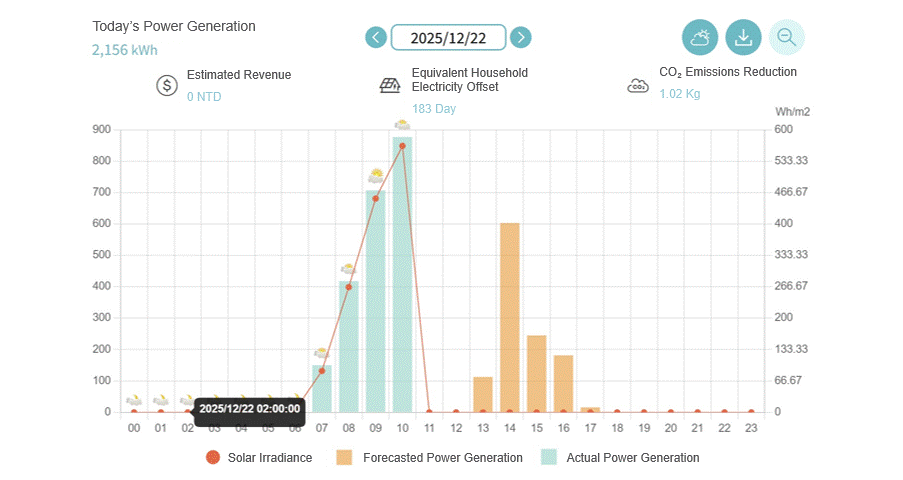
Power Output Curve Modeling on the AI Data Platform
(3) Structural health monitoring: In addition to electrical monitoring, operations and maintenance personnel analyze subtle fluctuations in inverter output power, supplemented by anemometer data, to estimate the impact of wind pressure on mounting structures and even assess the potential for micro-displacements within the support system.
5、Equipment Lifecycle Management and Redundant Replacement Strategies
Although solar PV plants are designed for lifespans exceeding 20 years, critical equipment—particularly inverters and solar modules—pose significant long-term operations and maintenance challenges due to varying life cycles, evolving technical standards, and supply stability concerns. Rapid technological advancements and manufacturer competition often lead to frequent product updates or discontinuations. As a result, when equipment is damaged by natural disasters, sourcing replacements for discontinued original components becomes a major operational challenge.

Accordingly, ECOVE has advanced its equipment lifecycle management strategy into cross-generation equipment replacement and system compatibility capabilities:

  (1) Spare parts planning and supply chain resilience:  The operations and maintenance management team conducts full lifecycle inventories and aging forecasts for all critical equipment—such as inverters, cables, and modules—and maintains appropriate spare part reserves to ensure post-disaster repairs are not affected by global supply chain delays. Replacement strategies are proactively developed, especially for legacy equipment models.

  (2) Module repowering and compatibility management:  The main challenge in module replacement is ensuring compatibility in electrical parameters, physical dimensions, and degradation curves between new and existing modules. Mismatched power ratings or voltage characteristics may reduce string efficiency or cause issues such as hot spots or current imbalance. The team manages degradation curve data and, when necessary, identifies and integrates replacement modules with the closest electrical performance available on the market to maintain stable power generation.

  (3) Cross-generation inverter replacement capability:  The team possesses the technical expertise to evaluate and integrate compatible next-generation inverters when original models are discontinued. This includes precise calculation of the new inverter’s DC input voltage range and  Maximum Power Point Tracking (MPPT) range to ensure alignment with existing module string outputs, while also guaranteeing seamless integration with the project’s existing SCADA monitoring system and grid communication protocols.
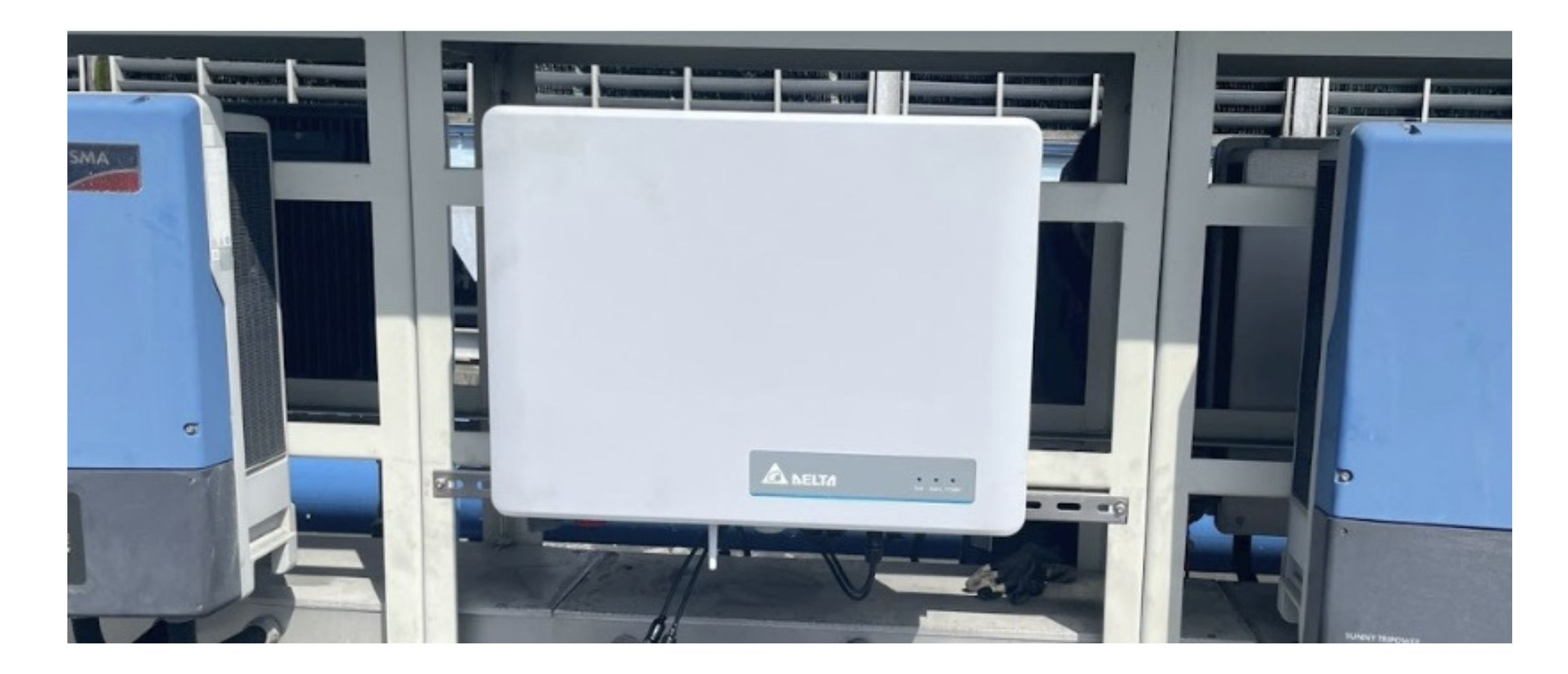
Site photo showing cross-generation inverter replacement
III.Conclusion
In the era of extreme climate, the success of solar PV projects can no longer be measured merely by meeting basic installation standards or simply “being able to generate electricity.” Instead, projects must deliver long-term stable power generation throughout operational lifecycles exceeding 20 years. As a result, resilience design has evolved from a value-added option into a fundamental requirement for safeguarding project lifecycles and protecting investment returns. Under a dual-track framework of front-end disaster prevention and back-end long-term stability, engineering teams comprehensively integrate resilience—from thorough risk anticipation during site selection (including wind, rainfall, geotechnical conditions, and salt corrosion) to intelligent enhancements in operations and maintenance management (covering prevention, monitoring, recovery, and equipment lifecycle management). This holistic approach ensures that solar PV assets remain safe, reliable, and consistently operational. Looking ahead, the CTCI Group will continue to intrgrate resilience into all aspects of green engineering across its project, fulfilling its mission as a “Guardian of Sustainable Earth.” By safeguarding the long-term value of renewable energy assets, the Group aims to establish a robust and trustworthy foundation for sustainable development for both society and industry.


