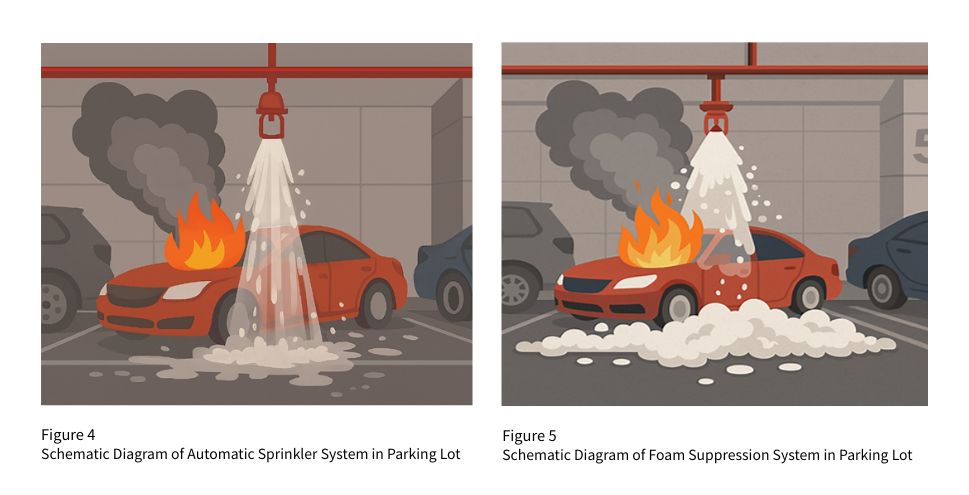
Eco-friendly Innovation
綠色創新
Implement Low Environmental Impact and High-Efficiency Sprinkler Systems to Advance Building Fire Safety and Environmental Sustainability

In recent years, global warming and abnormal climate conditions have become increasingly severe, and climate change has emerged as one of the most pressing global challenges. The continuous rise in global temperatures, frequent extreme weather events, melting glaciers, and rising sea levels are all warnings of excessive carbon emissions. In response to global climate change, energy conservation and carbon reduction have become a common direction for global efforts and an undeniable responsibility for everyone. Furthermore, these actions are crucial steps toward achieving “Net Zero Emissions”. CTCI Group is keeping pace with the times by implementing sustainable engineering practices through the application of “Green Engineering” and the promotion of “Net Zero EPC”. This approach aims to meet and exceed the National Development Council's Net Zero Pathway, with the goal of achieving net zero emissions by 2045.

In view of this, traditional engineering methods must also be reconsidered with new models to align with the trend of carbon reduction and net zero goals. The following discusses the integration of low-pollution and high-efficiency sprinkler systems in modern parking structures, replacing traditional foam suppression systems, to advance building fire safety and environmental sustainability.
Why Automatic Sprinkler Systems Are Better Suited for Contemporary Parking Lot
With the increasing popularity of electric vehicles (EVs), traditional foam suppression systems—previously tailored for internal combustion engine vehicle fires—are ineffective against the high-temperature fires of lithium-ion batteries. Domestic research institutions have confirmed through experimental studies that the cooling performance of automatic sprinkler systems is superior to that of foam suppression systems in these scenarios.

Globally, most regions outside Japan and Taiwan—including Mainland China, South Korea, the Americas, Europe, and Australia—use automatic sprinkler systems as the standard fire protection for indoor parking facilities. Considering factors such as the increased use of plastics in vehicles, electrical fire risks, and the specific hazards posed by lithium-ion and hydrogen fuel cell fires, fire safety design codes in Europe and the United States are largely moving towards increasing the water discharge density and extending the duration of water application for automatic sprinkler systems.

Compared to foam suppression system, automatic sprinkler systems are more economical (lower installation costs) while also meeting environmental and health requirements. In light of these findings, Taiwan's domestic fire safety regulations have been updated to include automatic sprinkler systems as a mandatory extinguishing equipment option for indoor parking lots. The following sections provide a detailed description.

1. System Description
The foam suppression system is a firefighting system specifically designed to extinguish flammable liquid fires (such as oil-based fires). It is commonly found in high-risk locations such as petrochemical plants, oil storage depots, and aircraft hangars, as well as in indoor parking lots and auto repair shops. The system achieves its extinguishing effect by blanketing the combustible materials with foam to isolate oxygen and reduce the temperature. Please refer to Figure 1 for the detailed system process flow.
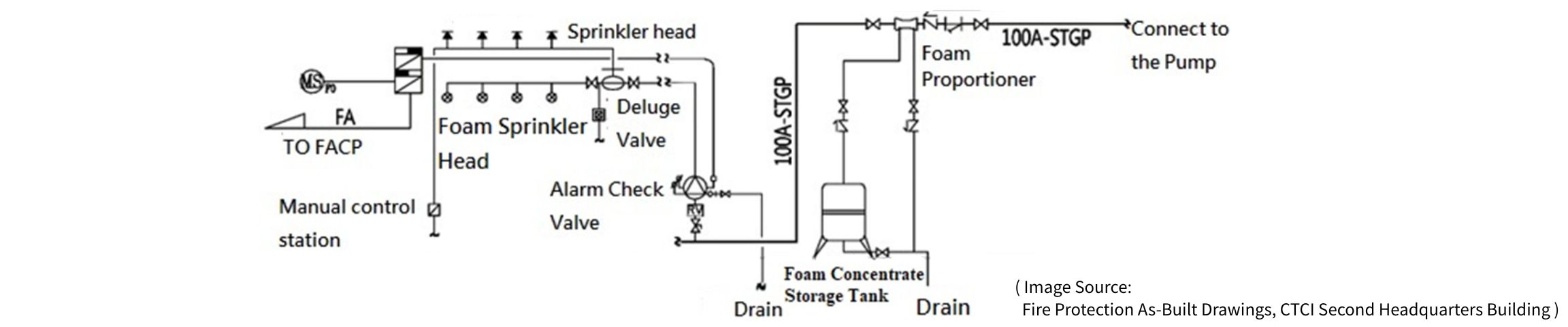
Figure 1 Schematic Diagram of Foam Suppression System
Automatic sprinkler systems are common and highly efficient fire protection systems capable of automatically activating during the early stages of a fire. They are widely applied in residential, commercial, and industrial settings. Their core advantage lies in the ability to control fire immediately before firefighters arrive, thereby reducing the loss of life and property. Please refer to Figure 2 for the system process flow.
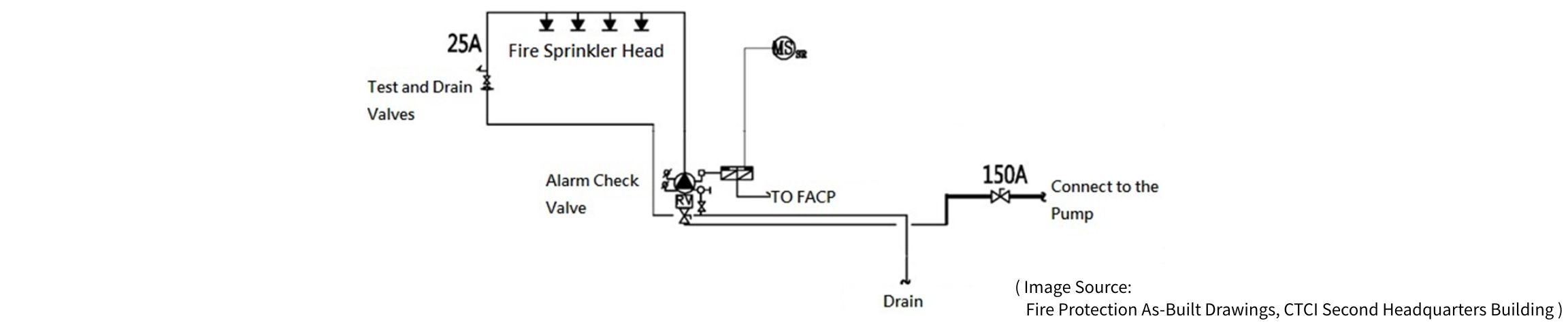
Figure 2 Schematic Diagram of Automatic Sprinkler System
2. Comparison of Differences
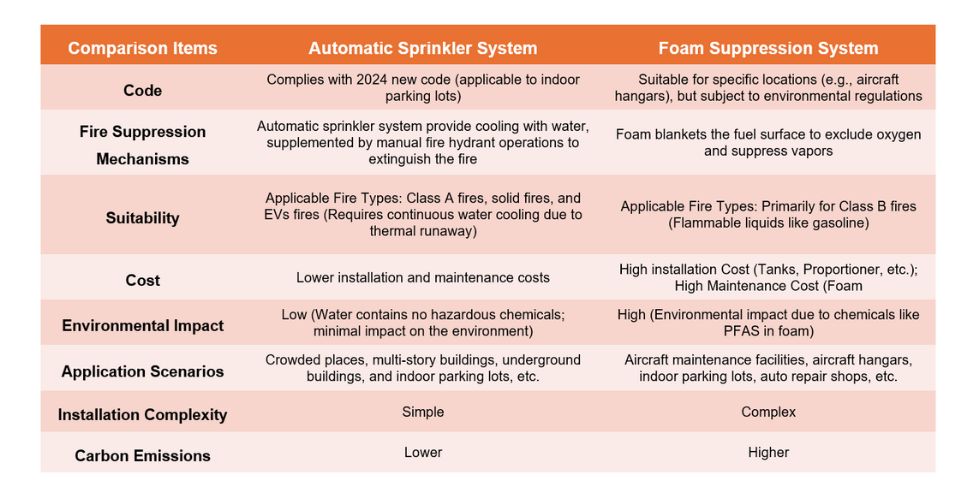
Table 1 Comparison between Automatic Sprinkler System and Foam Suppression System
3. Supporting Research and Literature
The report "Feasibility Study on Replacing Foam Fire Extinguishing Systems with Automatic Sprinkler Systems in Parking Spaces" by the Architecture and Building Research Institute (ABRI), Ministry of the Interior, focused on internal combustion engine (ICE) vehicles in indoor parking environments. Through experimental comparisons of the cooling effects between automatic sprinklers and foam suppression, the study explored whether automatic sprinkler systems can prevent fire spread from a burning vehicle to adjacent ones.

The experiments revealed that vehicle fires are shielded fires caused by the vehicle body. Since lithium-ion batteries are typically installed in the chassis with reinforcement and casing, neither foam solutions nor water droplets can directly reach the burning surfaces.
Consequently, it is difficult to completely extinguish the fire using either foam suppression systems or automatic sprinkler systems. Therefore, rather than focusing on total extinguishment, it is more practical to use large volumes of water for cooling to interrupt the continuous thermal runaway of the batteries and prevent the fire from spreading to the surrounding area. Specifically, while foam suppression can exclude oxygen, its cooling rate is slow and insufficient for the high-heat combustion of electric vehicles (EVs). In contrast, the cooling effect of automatic sprinkler systems is significantly superior to that of foam suppression systems. Sprinklers can provide effective cooling and prevent inter-vehicle fire spread during the initial stages of a fire, rapidly reducing temperatures, suppressing fire propagation, effectively lowering the heat release rate (HRR), and controlling the overall fire temperature to minimize damage to adjacent vehicles.

Referring to Figure 3 below, the experiments demonstrated that all three types of fire suppression systems—deluge (open-head) systems, closed-head sprinkler systems, and foam suppression systems—can provide cooling effects. Within 30 seconds of discharge, the surface temperature at the center of adjacent vehicles was reduced to below 85°C. However, the cooling performance of automatic sprinkler systems outperformed foam suppression systems, proving that sprinkler systems can effectively provide cooling and prevent the spread of vehicle fires.
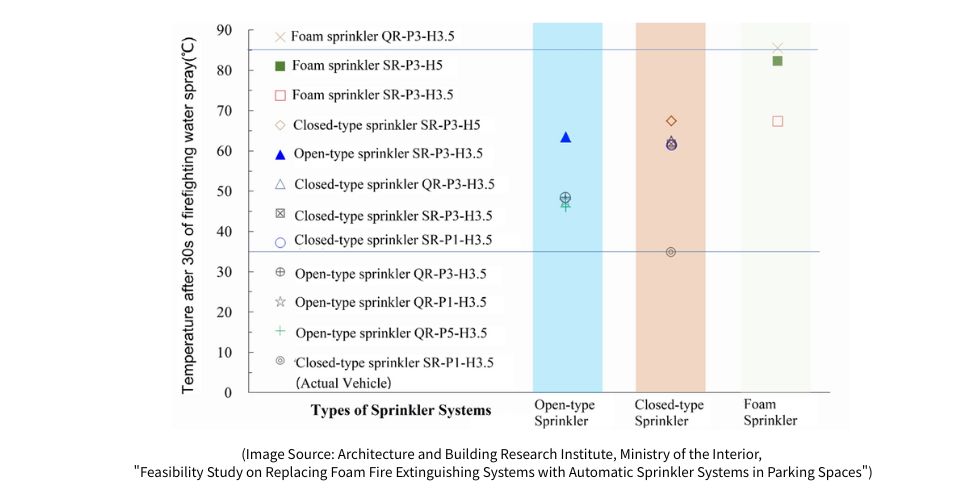
Figure 3 Relationship between system types and surface temperatures of adjacent vehicle bodies 30 seconds after discharge
4. Summary of Core Insights
Once a fire occurs in an indoor parking space, if it is not extinguished or controlled in its early stages, it can easily lead to dense smoke and high-heat accumulation. Such an environment is detrimental to personnel evacuation and firefighting operations. Therefore, when developing fire safety regulations—whether for internal combustion engine (ICE) vehicles or electric vehicles (EVs)—countries worldwide prioritize cooling performance to control fire growth and reduce the temperature of adjacent vehicles and the fire scene during the initial stages.

From a fire suppression perspective, automatic sprinkler systems not only prevent inter-vehicle fire spread but also provide a continuous and massive supply of water for cooling, effectively confining the fire and controlling propagation. In response to the challenges of contemporary parking facility fires, automatic sprinkler systems have become a compelling alternative to foam suppression systems.
Select Eco-Friendly Fire Suppression Systems to Promote Environmental Sustainability
1.Comparison of Carbon Emission Differences
Based on the system processes described in previous chapters, foam suppression systems are more complex than automatic sprinkler systems, resulting in higher equipment procurement and construction costs, as well as higher carbon emissions during construction. Using a single-story parking lot with 60 parking spaces (area: 2,600 m²) as the calculation basis, the carbon emission factor for tap water from the Taiwan Water Corporation is approximately 0.156 kgCO₂e per unit (m³). In contrast, the carbon emissions from producing foam concentrate range from approximately 3 to 10 kgCO₂e/kg. When further accounting for the manufacturing of equipment and piping, as well as the carbon footprint of installation labor, adopting an automatic sprinkler system instead of a foam system reduces carbon emissions by approximately 7,690 kgCO₂e (refer to Table 2).
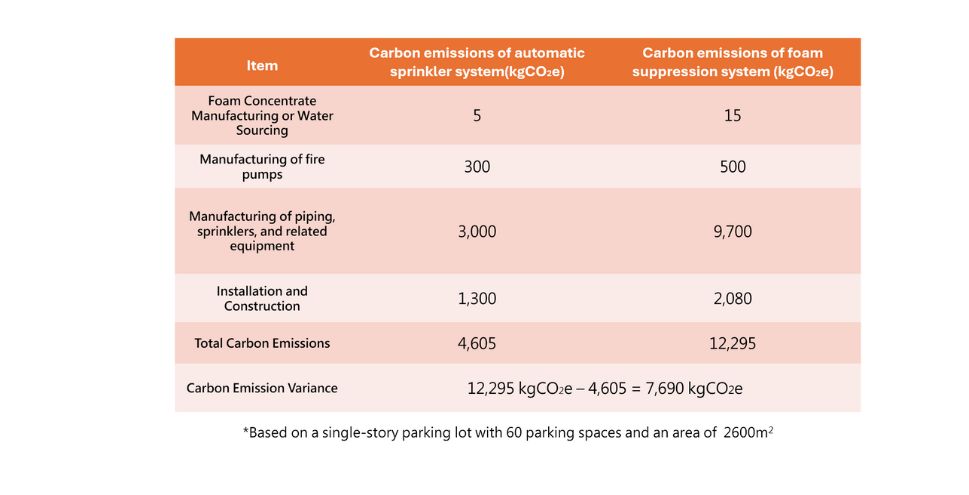
Table 2 Comparison of Carbon Emission Differences between Automatic Sprinkler Systems and Foam Suppression Systems
2.Environmental and Personal Safety Considerations
If fire foam solutions are discharged directly into drains or sewer systems, they will cause environmental pollution. As environmental regulations become increasingly stringent, regulatory authorities now require foam wastewater to be contained and directed into collection tanks for treatment by professional agencies. Discharge is only permitted once it meets effluent standards; otherwise, penalties will be imposed. This professional treatment process imposes a significant operational and maintenance burden on management units. Furthermore, as foam solutions are ultimately chemical compositions, accidental contact with the human body may pose health risks.

3.Review of Environmental Sustainability Concepts
In summary of the above content, automatic sprinkler systems have lower initial installation costs and do not require dedicated foam storage tanks and concentrates, making installation more economical and generating lower carbon emissions during construction. In contrast, foam suppression systems have more complex piping and require specialized equipment like foam concentrate tanks and proportioners, resulting in higher installation and equipment procurement costs, as well as relatively higher carbon emissions. Furthermore, automatic sprinkler systems have long maintenance cycles, while foam suppression systems require regular replacement of the foam concentrate to maintain effectiveness, which increases maintenance costs.

Regarding environmental impact, automatic sprinkler systems use clean water as the extinguishing agent, resulting in a low environmental impact after a fire event and helping to comply with increasingly stringent environmental regulations. Conversely, foam extinguishing liquid contain hazardous chemical substances; if discharged without proper collection and treatment, they will cause pollution to rivers and the environment.
Domestic Regulatory Authorities and Government Authorities Promote the Prioritized Installation of Sprinkler Systems in Parking Lots
Driven by the global net-zero trend, the government is actively promoting carbon reduction and green energy transition. As electric vehicles (EVs) rapidly popularize in line with energy policies, Taiwan’s fire safety regulations have also been adjusted accordingly. Indoor parking spaces traditionally adopted foam suppression systems; however, conventional foam suppression systems are ineffective against high-temperature fires such as lithium-ion battery fires. The characteristics of these fires necessitate the use of large amounts of water for prolonged cooling to effectively confine or control the fire. Therefore, the Ministry of the Interior (MOI) announced on April 24, 2024, a revision to the "Standards for the Installation of Fire Safety Equipment in Various Establishments", allowing the optional installation of automatic sprinkler systems in indoor parking lots.

In addition to the central government's legal amendments, local fire regulatory authorities also recommend prioritizing automatic sprinkler systems in the fire safety design of indoor parking facilities to enhance the efficacy of automatic fire suppression in the initial stages of a fire.

Adhering to the philosophy of net-zero emissions and environmental protection, CTCI group has incorporated automatic sprinkler systems into the parking lot fire design for recent projects, such as the Luzhou Guanghua Youth Social Housing, Neihu Shibitan Youth Social Housing, and the Quanta Storage Inc. Headquarters Building. For concerned customers, we provide foreign case studies, research literature, and experimental data as evidence to compare and analyze the pros and cons, striving to persuade them to adopt automatic sprinkler systems. This approach ensures compliance with fire safety design requirements while simultaneously reducing costs and minimizing environmental impact.
Conclusion and Future Outlook
In summary of the preceding chapters, automatic sprinkler systems are suitable for most fire scenarios, including electric vehicle (EVs) fires. Their greatest advantage lies in the ability to automatically activate during the initial stages of a fire, rapidly controlling temperatures and suppressing fire spread before firefighting personnel arrive. This gains critical time for evacuation, reducing casualties and property damage. The system is stable, reliable, and features low maintenance costs with minimal environmental impact. With strong advocacy and encouragement from municipal fire regulatory authorities, the adoption of automatic sprinkler systems in indoor parking lots has clearly become the future trend.

While foam suppression systems are highly effective against oil fires, their high costs, environmental impact, and limitations in addressing electric vehicle (EVs) fires make them less suitable than automatic sprinkler systems in certain contexts. With the advancement of regulations and environmental awareness, an increasing number of indoor parking facilities are likely to restrict or phase out foam suppression systems.

In summary of the above and in response to energy policies and international trends, automatic sprinkler systems have become the preferred choice for fire safety equipment in indoor parking lots due to their high efficiency, low carbon footprint, and eco-friendly characteristics. They not only effectively reduce costs but also ensure environmental sustainability and align with net-zero carbon emission goals.