
Discover Reliable
發現信賴
CTCI Strengthens CPC’s Nationwide Gas Supply Resilience: EPC Project for Storage Tanks and Regasification Facilities at Taiwan’s Third LNG Receiving Terminal
Jack Zhang, Process Engineer, CTCI Corp., Group Engineering Business
- Market category: Liquefied natural gas (LNG) receiving terminal
- Owner: CPC Corporation, Taiwan
- Contractor: CTCI Group
- Completion Dates: Regasification facilities (June 2025); LNG Storage tanks (August 2025)
- Location: Guanyin District, Taoyuan
- Scope: Engineering, Procurement, Construction, and Commissioning
- Capacity: Two 160,000 m³ LNG storage tanks; Regasification capacity of 1,200 tons/hour
Amid the global trend toward net zero emissions by 2050, the Taiwanese government is actively advancing energy transition initiatives. The Third LNG Receiving Terminal in Taiwan (Terminal 3), or officially named CPC Corporation Guantang LNG Receiving Terminal, is a key project aimed at achieving the national power generation target of 50% from low-carbon, natural gas sources by 2025. Located in Guanyin District, Taoyuan County, the project will also help the county’s Datan Power Plant to reduce its current reliance on long-distance gas transmission from Taichung LNG Receiving Terminal (known as the “south-to-north gas supply”), thereby significantly enhancing Taiwan’s gas supply resilience and ensuring stable electricity supply in northern Taiwan.

With extensive experience and a strong track record in LNG terminal projects both domestically and internationally, CTCI Group has participated in every LNG receiving terminal in Taiwan, whether in operation or under construction. In this project, CTCI was responsible for the engineering, procurement, construction, and commissioning (EPCC) of the most critical onshore components: storage tanks and regasification facilities.

Notably, the Terminal 3 site spans only 13 hectares, making it the smallest LNG receiving terminal in the world in terms of site area. Despite challenging environmental constraints and complex interface, the CTCI team leveraged its technical expertise and global project experience to deliver successful outcome, once again demonstrating its world-class engineering capabilities.
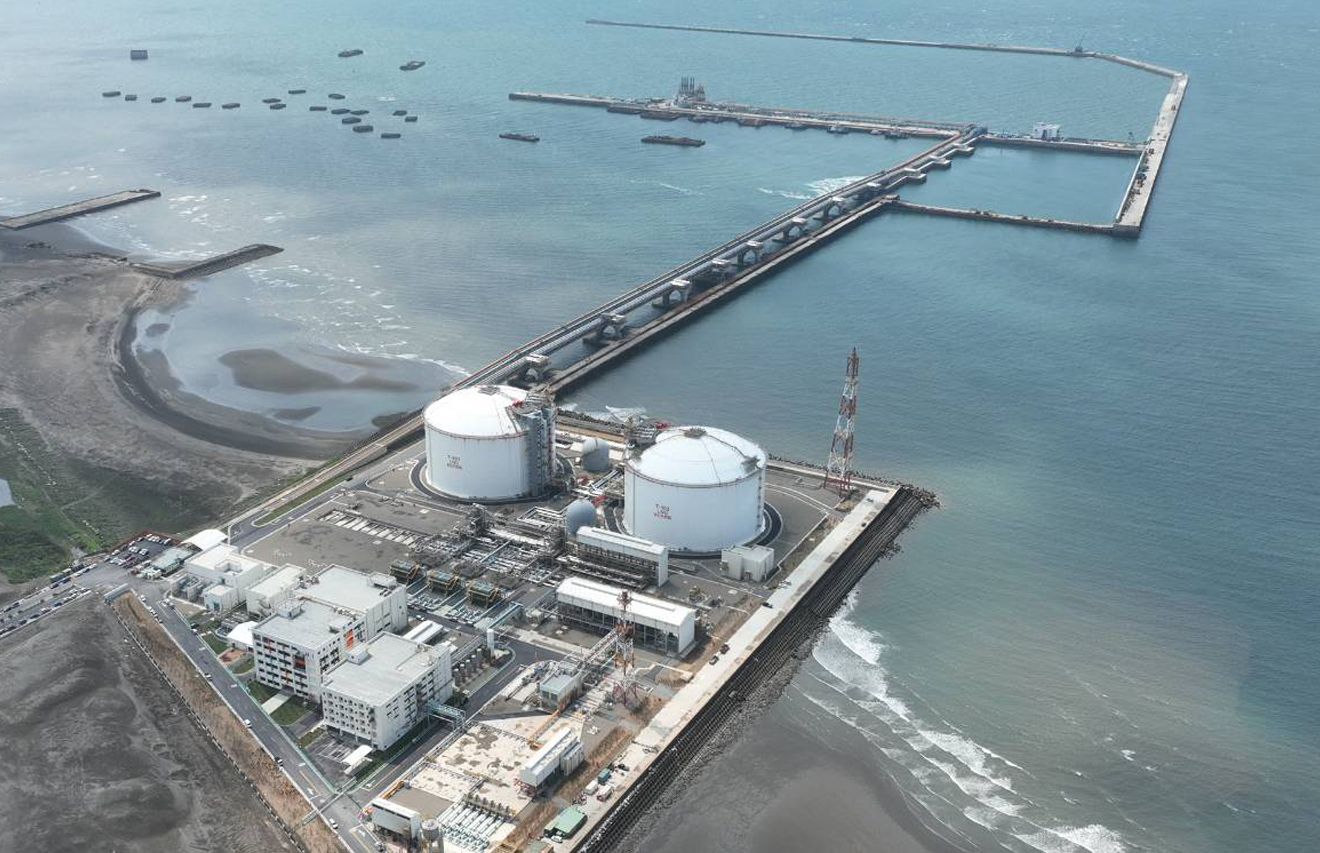
CPC Corp.’s Third LNG Receiving Terminal
Why CTCI?
The Only Company in Taiwan Capable of LNG Terminal EPC Work
CTCI has over four decades of experience in the LNG sector, having completed 11 LNG receiving terminal projects—new builds and expansions— across Taiwan, China, India, and Thailand, with a combined annual gas supply capacity of 40 million tons. Ongoing projects include Taiwan’s Sixth LNG Terminal (owned by Formosa Petrochemical Corporation) and the Seventh LNG Terminal (the Kaohsiung Intercontinental Terminal owned by CPC Corp.). CTCI is the only contractor in Taiwan with comprehensive EPC capabilities covering regasification facilities, LNG storage tanks, jetties, and long-distance gas pipelines, making it the preferred choice for this project.
Reliable Realized
Outstanding Coordination to Overcome Pandemic and Interface Challenges
At the peak of construction, there were eight concurrent subprojects and six teams involved, including LNG storage tanks, regasification facilities, gas sendout pipelines, trestles, land reclamation and embankment, jetty extensions, unloading facilities and pipelines at pier, and breakwater works. CTCI was responsible for the LNG storage tank and regasification packages, where interface coordination among multiple contractors was highly complex and posed a major challenge.

During execution, the project was impacted by the COVID-19 pandemic. The CTCI team strictly followed government regulations and implemented comprehensive preventive measures to minimize cross infection risks and avoid prolonged work stoppages. To comply with quarantine policies while maintaining quality, local third-party inspectors were engaged for inspections, and remote video supervision was used for critical equipment such as LNG primary pumps. Vendors were required to conduct factory acceptance tests using LNG for cryogenic performance verification to ensure compliance with contractual standards.

With a strong commitment to the owner, CTCI continuously coordinated with subcontractors, conducted site investigations, and applied professional construction planning and simulations to determine optimal sequencing, logistics, and methodologies—maximizing overall project progress.
Project Highlights
The World’s Smallest LNG Receiving Terminal in Terms of Site Area
In response to calls for algal reef protection that was the subject of a previous referendum, the LNG terminal design underwent significant changes. The site area was reduced from an originally planned 248 hectares through dredging to 13 hectares without dredging or landfilling, making Terminal 3 the smallest LNG receiving terminal in the world in terms of site area. The confined site, combined with multiple contractor interfaces, significantly increased execution complexity. In addition, commitment was made during the environmental impact assessment to prohibit off-site soil disposal, requiring careful planning of temporary on-site storage areas during large-scale excavation.

The coastal location introduced further challenges: Due to the proximity of LNG Terminal to the coastal embankment, there were no shields. Air and moisture contain high level of salinity, which accelerated equipment corrosion and failure rates. The lack of natural barriers also exposed the construction site to strong northeast monsoons, which frequently halted lifting operations whenever wind speeds exceed 10 meters per second. Overall, construction was affected by a long period of excessive winds. Moreover, with suboptimal pier shape, the site was exposed to unpredictable southwest gale and surging waves. As a result, effective working days were reduced to less than 30%, posing severe challenges to construction. To mitigate these impacts, materials with enhanced leak resistance, corrosion resistance, and durability were selected to extend equipment lifespan.

Despite these constraints, the CTCI team was resolved to get the job done. By painstakingly coordinating multiple contractors within the confined site, optimizing traffic flow, work sequencing, and construction methods, CTCI successfully completed the world’s smallest LNG terminal, a proof of CTCI’s world-class capabilities.
Innovative Technology
Pre-Cooling Down and LNG Filling Operation for the Longest LNG Unloading Pipeline in Taiwan
During commissioning, the project faced an additional challenge. The terminal includes Taiwan’s longest LNG unloading pipeline—2.5 km in length and 48 inches in diameter. Filling cryogenic LNG at approximately -162°C into ambient-temperature pipelines would cause a phenomenon known as thermal bowing, destroying the pipelines. Therefore, pipelines and LNG storage tanks must be cooled down, with temperature differentials controlled within 60°C. CTCI pre-cooled down the unloading pipeline to -80°C to -100°C before LNG filling. The LNG storage tank base plate cooling rate was strictly limited to -3 to -5°C per hour. Multiple controls related to temperature differentials between tank walls and base plate were also observed.

Pre-cooling down was achieved using cold natural gas below -120°C supplied from LNG carriers via ship LNG vaporizers (which vaporized LNG stored in cargo tank), with cold natural gas (NG) flowrate of 20 to 23 tons per hour. This enabled the pre-cooling of the 2.5 km, 48-inch unloading pipeline and the 1.8 km, 20-inch circulation/sendout pipeline. The method, approved by the owner, required 133.5 hours of continuous cooling down and filing under strict monitoring. In the end, the team successfully completed this critical task.
Accelerated Nitrogen Purging for LNG Storage Tanks
To supply high pressure natural gas for power generation at Datan Power Plant as early as possible, the owner required CTCI team to shorten the commissioning schedule. Faced with an extremely tight schedule, CTCI team optimized the process by integrating unloading pipeline pre-cooling down with LNG storage tank nitrogen purging operations.

Before LNG is injected into the LNG storage tank, methane concentration in inner LNG storage tank must reach 80% to prevent BOG compressor motor overload due to excessive nitrogen content. However, with two LNG storage tanks in this receiving terminal, traditional purging methods would have been time-consuming.

To improve execution efficiency, the CTCI team came up with a scheme to shorten the nitrogen purging process of the LNG storage tanks. First, cold NG supplied from the LNG carrier’s ship LNG vaporizer was used to pre-cool down 48-inch unloading pipeline. During the pre-cooling down operation, the warm NG flowed from the pipeline into the LNG storage tank, and was ultimately routed to the flare system for combustion and discharge to the atmosphere.

At the initial stage, the relatively warm NG entering the LNG storage tank had a higher temperature and lower density, and therefore could not settle at the bottom. As a result, nitrogen in the LNG storage tank could not be effectively be displaced through the BOG line at the top. However, as pre-cooling down operation went on, the temperature of NG entering the LNG storage tank gradually decreased. Once it dropped below -90°C, the NG became denser than the nitrogen in the LNG storage tank and began to sink, thereby displacing the lighter nitrogen upward and out through the BOG line. This phenomenon is referred to as reverse piston flow.

Per CTCI’s commissioning plan, during unloading pipeline pre-cooling down operation, the LNG storage tank T-102 inlet valves were opened in priority to carry out nitrogen purging for this LNG storage tank. After the methane concentration in LNG storage tank T-102 met acceptable criteria, the tank inlet valves were switched to LNG storage tank T-101 to complete nitrogen purging for the second LNG storage tank. In this way, nitrogen purging for LNG storage tanks T-101/T-102 was completed concurrently with the pre-cooling of the 48-inch unloading pipeline, significantly reducing the overall operation time.

Thanks to these efforts, commissioning of the regasification facilities was completed on schedule, with certain facilities even ahead of plan. In the first half of 2025, several key targets were successfully accomplished, including the berthing of the first LNG carrier and LNG unloading in April in support of plant commissioning. In the same month, the second stage commissioning commenced, enabling initial high pressure natural gas supply to the Datan Power Plant. Maximum NG sendout flowrate test for regasification project was completed in June, and commercial operation with high pressure natural gas supply officially commenced in September, successfully fulfilling the owner’s expectations.
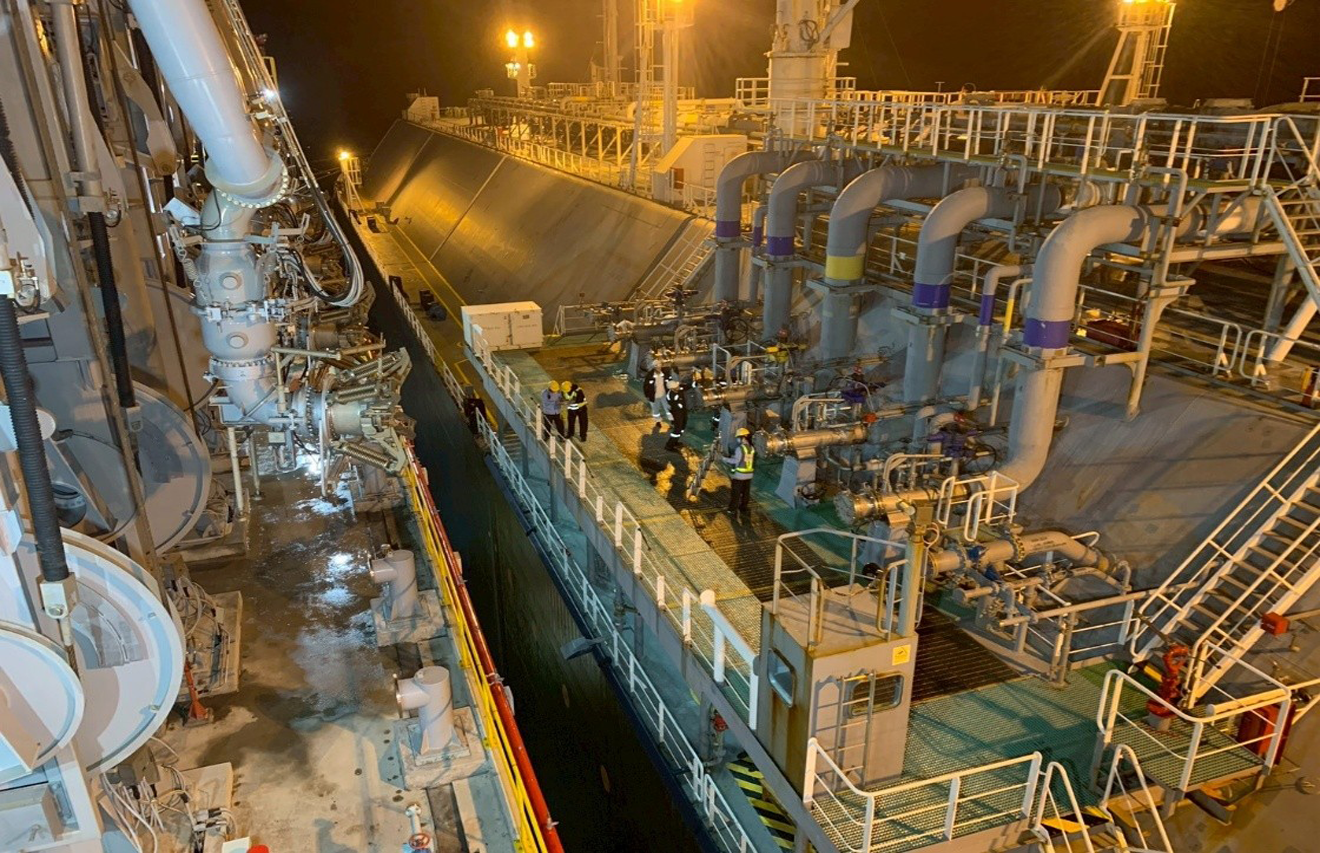
First LNG carrier departing after first stage commissioning was completed at the Third LNG Receiving Terminal.
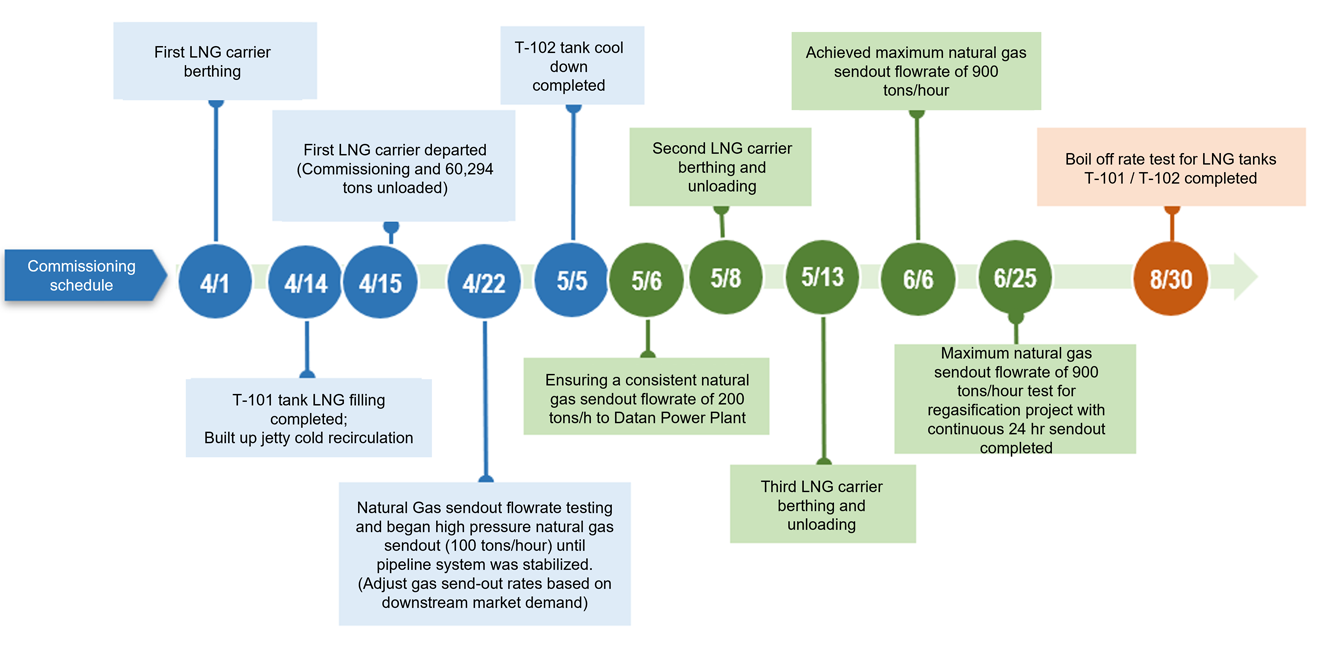
Commissioning progress of the Third LNG Receiving Terminal
Message from the Owner
“CTCI is one of the few engineering companies in Taiwan with extensive experience and a proven track record in LNG receiving terminal projects. During the execution of the Third LNG Receiving Terminal project, CTCI team faced numerous internal and external challenges, including harsh site weather conditions, the COVID-19 pandemic, labor shortages, design change (outward extension of LNG jetty), complex interface management, and the impacts of the Russia–Ukraine war. Despite these challenges, CTCI successfully accelerated project progress in close coordination with the owner and smoothly achieved key milestones across commissioning, natural gas send-out, and ultimately commercial operation. This demonstrates the company’s comprehensive, robust, and highly reliable project integration capabilities.”

—CPC Corporation Guantang LNG Receiving Terminal Factory Chief


